
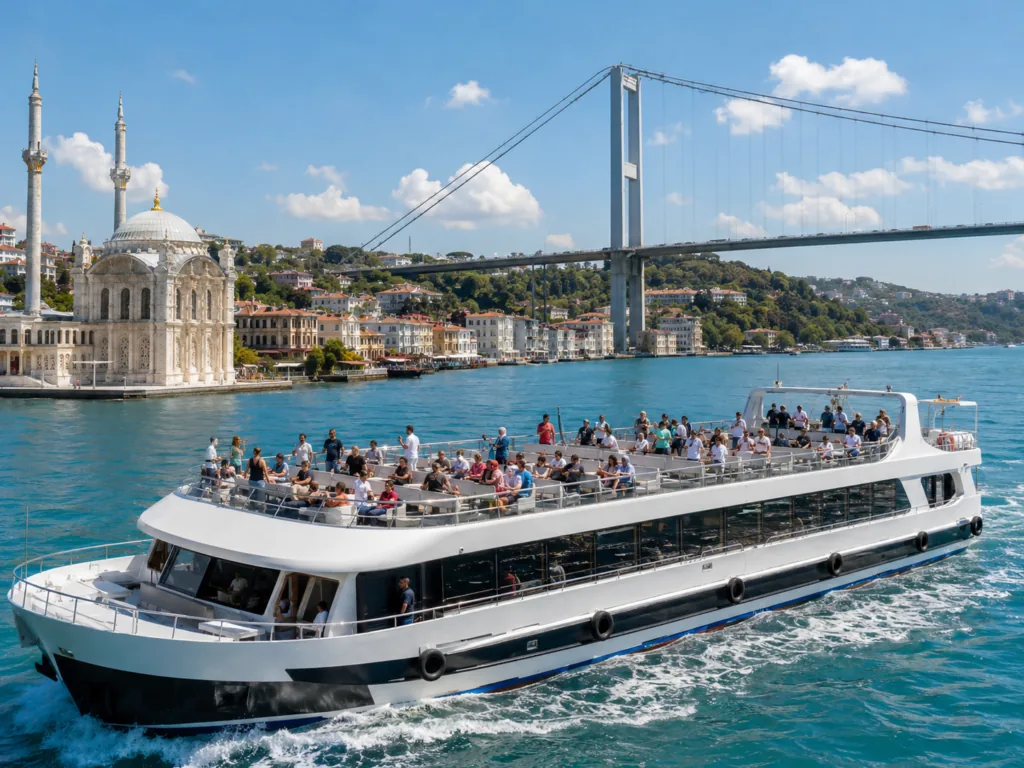
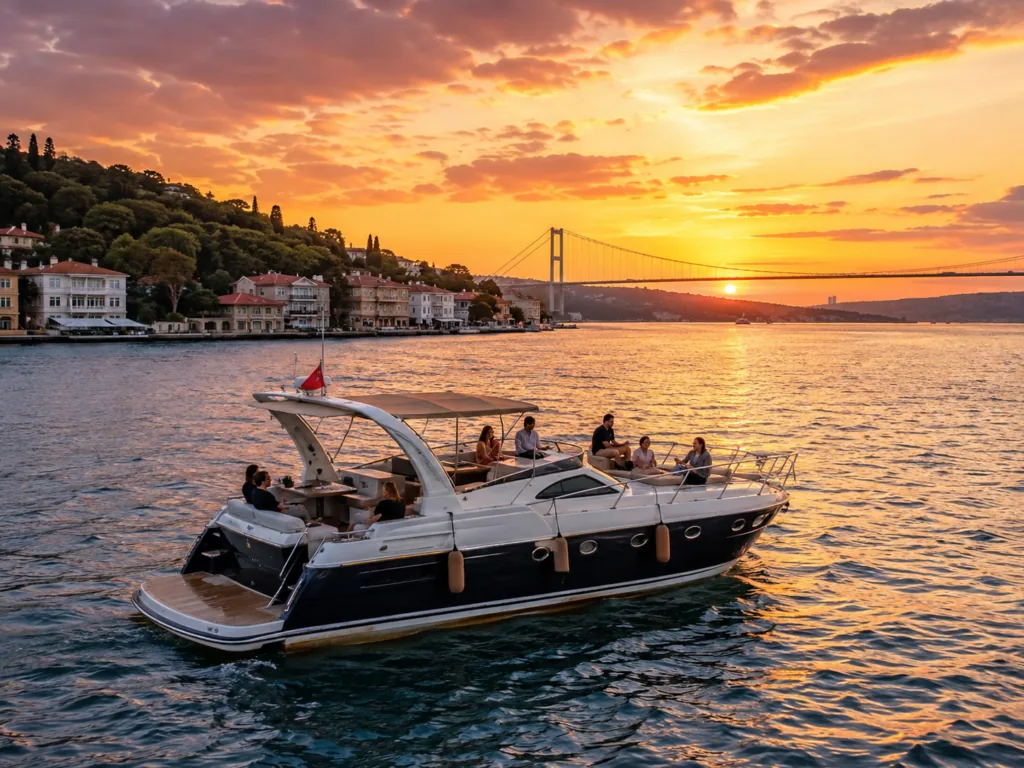
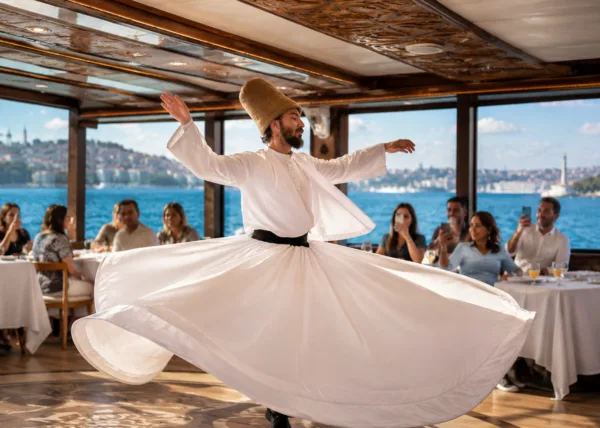


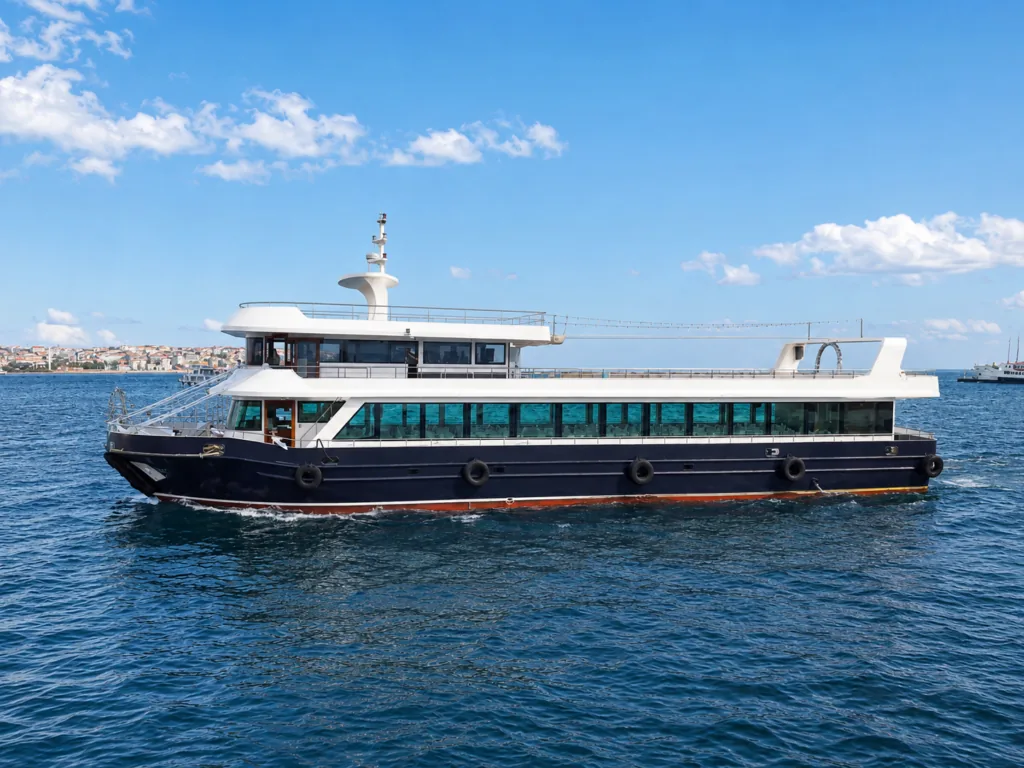


The whirling dervish show is one of Turkey’s best-known cultural performances. It is inspired by the Sema, the spiritual ceremony of the Mevlevi order, a Sufi brotherhood that grew up in 13th-century Konya around the teachings of the poet and mystic Jalaluddin Rumi, known in Turkey as Mevlânâ. In Istanbul you can see it in two very different settings: as a full ceremony at a cultural venue, or as a shorter stage performance during an evening programme such as our Bosphorus dinner cruise, which sails from Kabataş Pier every evening from 20:30 to 23:30. This guide explains what the dance means, what the dervishes wear and how the show on the boat differs from a traditional Sema.
What Happens During a Whirling Dervish Performance?
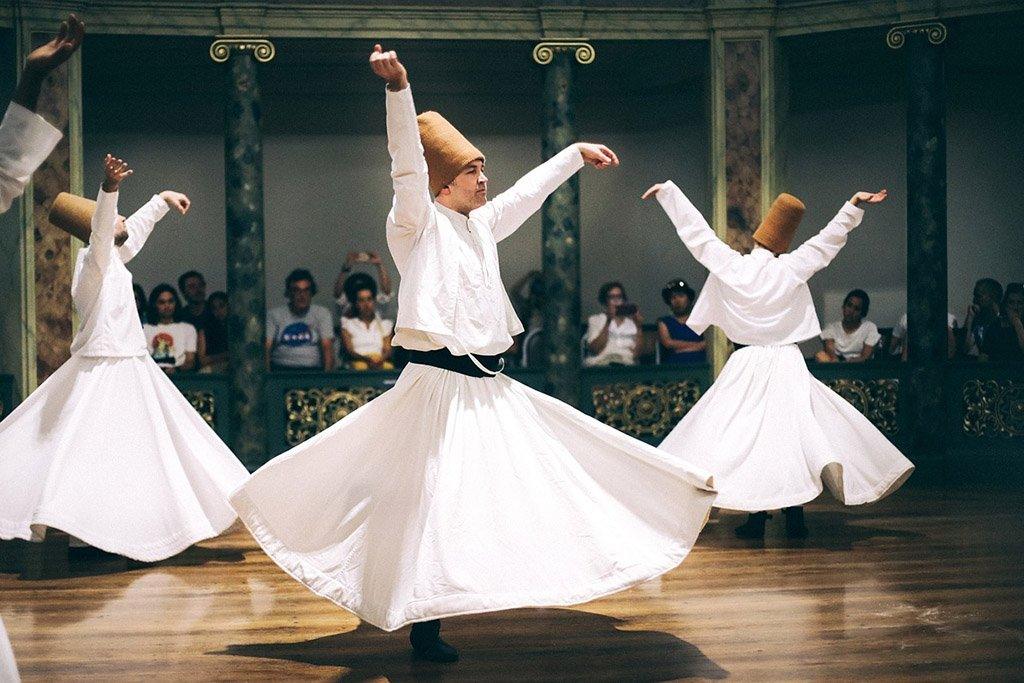
A traditional Sema follows a fixed order. It opens with a hymn in praise of the Prophet, followed by an improvisation on the ney (reed flute) and music played on instruments such as the kudüm drums, the tanbur and the rebab. The semazens (whirling dervishes) walk slowly around the hall and greet one another, take off their black cloaks and begin to turn, with the right palm facing upwards to receive God’s blessing and the left palm facing downwards to pass it on to the earth. The turning is performed in four sections called selams, each with its own meaning, and the ceremony ends with a recitation from the Qur’an and a prayer. It is a form of meditation, so the dervishes turn calmly and steadily rather than at speed.
Why Are They Called Whirling Dervishes?
The name comes from the turning itself. Rumi taught that love and devotion lead the soul towards God, and the Mevlevi order, organised after his death in 1273 by his son Sultan Veled, made the turning prayer its central ritual. Each turn, from right to left around the heart, is often compared to the planets circling the sun and represents the soul’s journey towards divine truth. European travellers who saw the ceremony in Ottoman times called its performers “whirling dervishes”, and the name has stayed in English ever since.
Where Does the Word “Dervish” Come From?
The word “dervish” comes from the Persian darvish, often explained as “one who stands at the threshold” or “a poor person”. In Sufi tradition it describes someone who has chosen a simple, humble life devoted to God rather than to material wealth. Dervishes traditionally lived and studied in lodges known as tekkes, under the guidance of a spiritual teacher.
For the Mevlevi dervishes, music, poetry and movement are all ways of remembering God. Rumi’s poetry, above all the Masnavi, remains at the heart of the tradition, and his verses are still sung during the ceremony. In 2008 UNESCO inscribed the Mevlevi Sema ceremony on its Representative List of the Intangible Cultural Heritage of Humanity.
The Dervish Costume: Black Cloak, White Robe and Felt Hat
Every part of the dervish costume carries a meaning. The tall, honey-coloured felt hat, the sikke, represents the tombstone of the ego. The black cloak, the hırka, worn at the start of the ceremony, stands for the grave: when the dervishes take it off, they symbolically leave worldly attachments behind. The white robe underneath, the tennure, represents the shroud of the ego and the purity of the soul, and it flares out as the dervish turns.
Sufi lodges were closed in Turkey in 1925, but the Sema has survived as a cultural and spiritual tradition. Today it is performed by trained semazens at venues across the country, most famously during the Şeb-i Arus commemoration of Rumi’s death, held in Konya every December.
Would you rather watch a dervish performance on land? Tickets are also available for the show at the Cistern of Theodosius.
The Show on the Dinner Cruise vs a Full Sema Ceremony
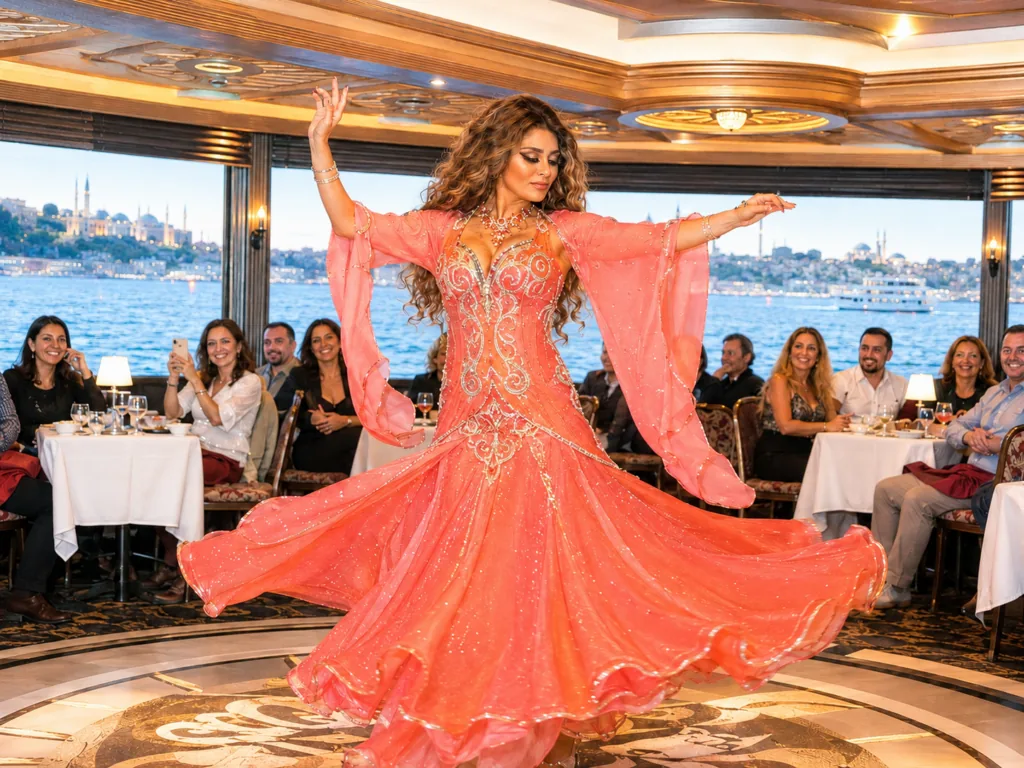
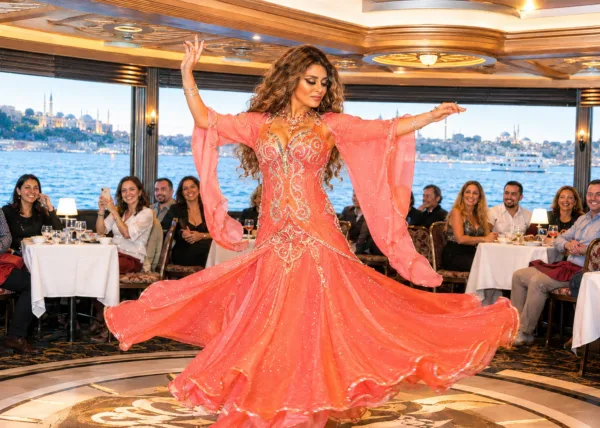
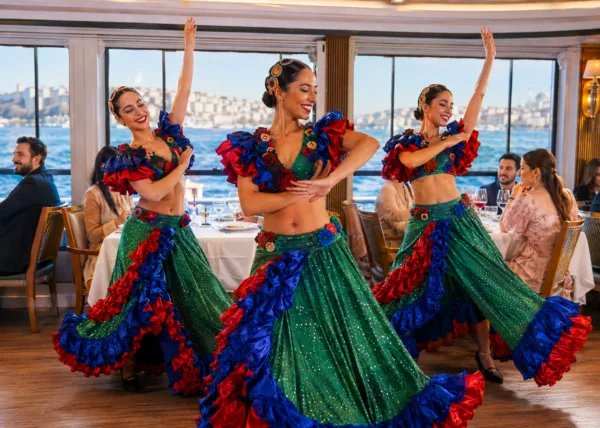
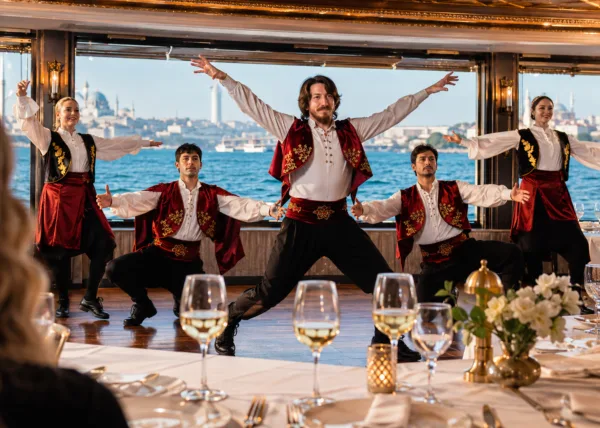
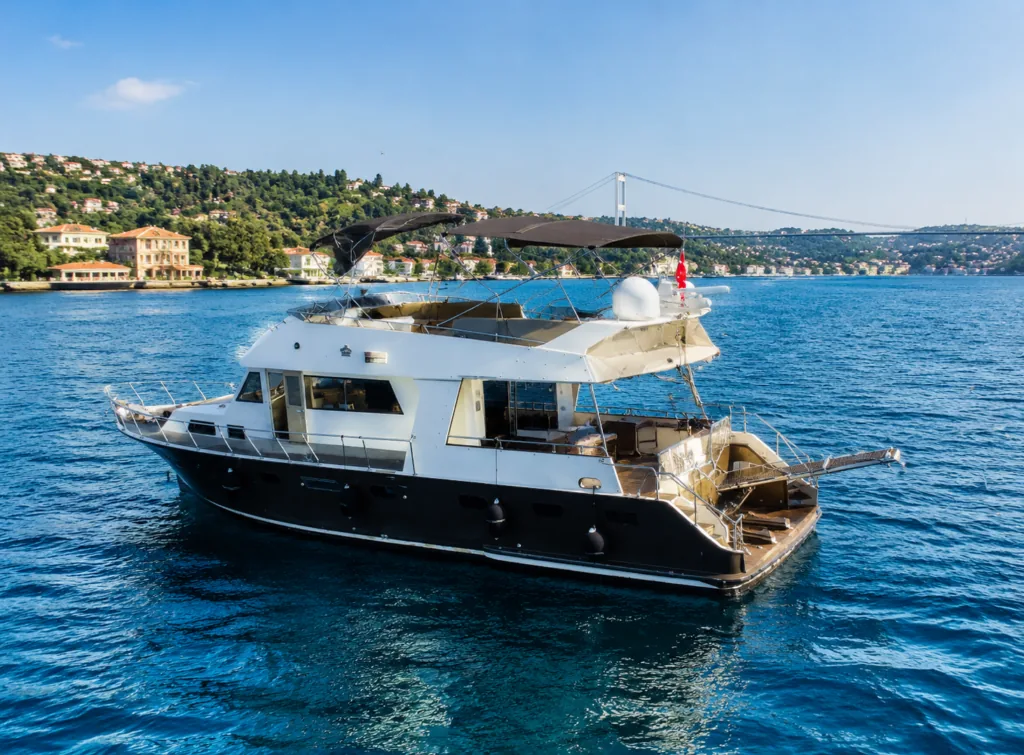
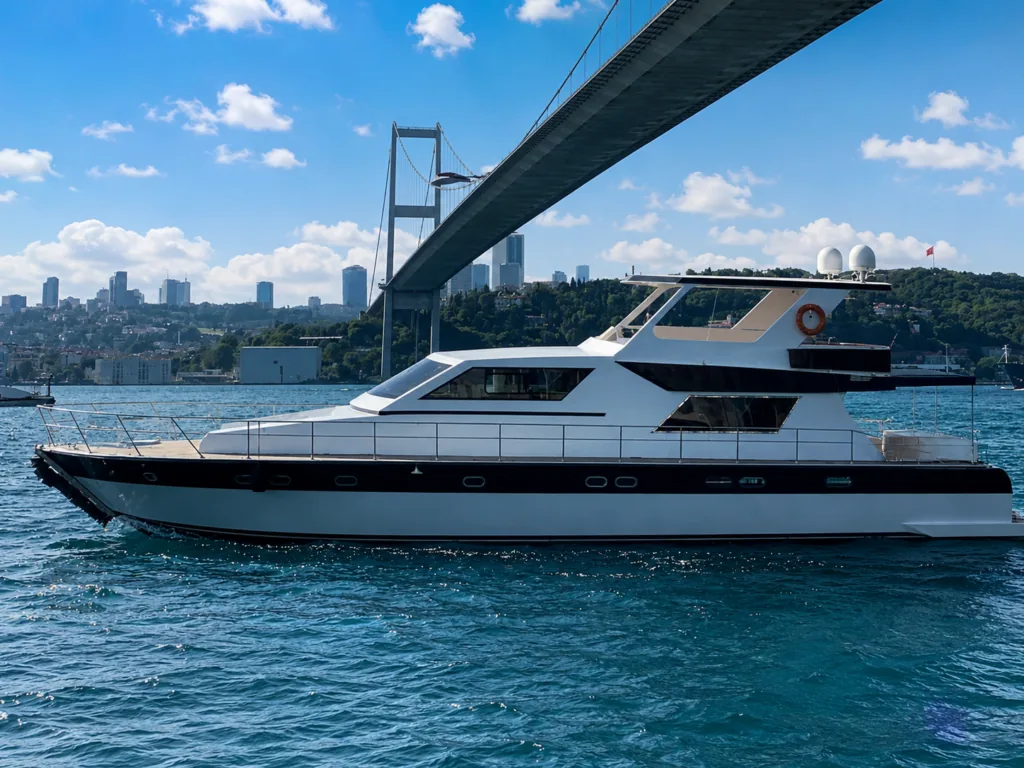
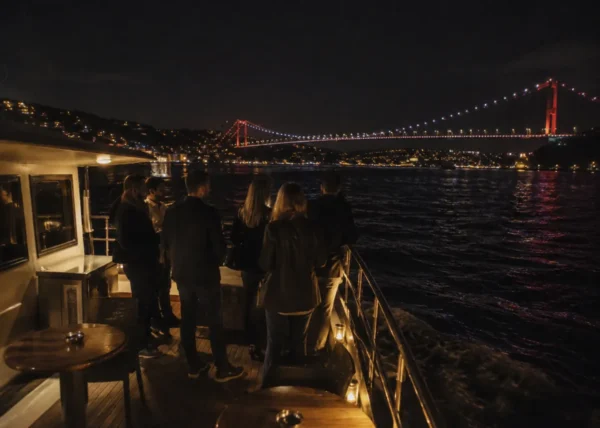
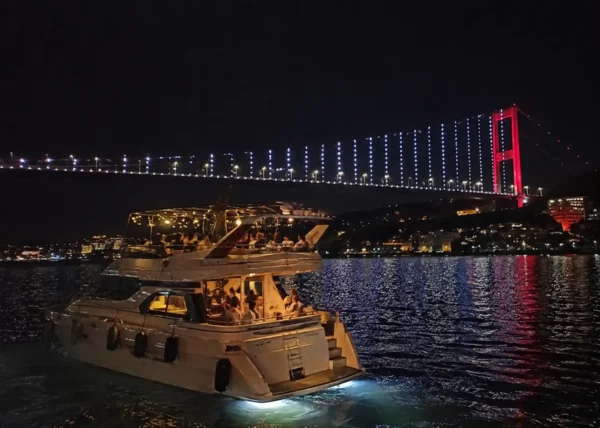
The performance on our Bosphorus dinner cruise is a short stage show inspired by the Sema. It is part of a cultural evening that also includes a professional belly dance show and Turkish folk dances, served alongside a multi-course dinner. It is an introduction to the tradition rather than a religious ceremony, and a relaxed way to see the costumes and the turning up close while the illuminated palaces and bridges of the Bosphorus pass by.
If you would like to experience the Sema as a spiritual ceremony, with the complete musical programme and an audience that watches in silence, attend a performance at a dedicated cultural venue in Istanbul, such as the historic Galata Mevlevi Lodge or the Hodjapasha Culture Centre near Sirkeci. Wherever you watch, stay quiet during the turning, avoid flash photography and save your applause for the end, if at all.
Questions answered in this article
Summarize with AI: ChatGPT · Claude · Perplexity
Comments (0)