Istanbul Oriental Belly Dance Show

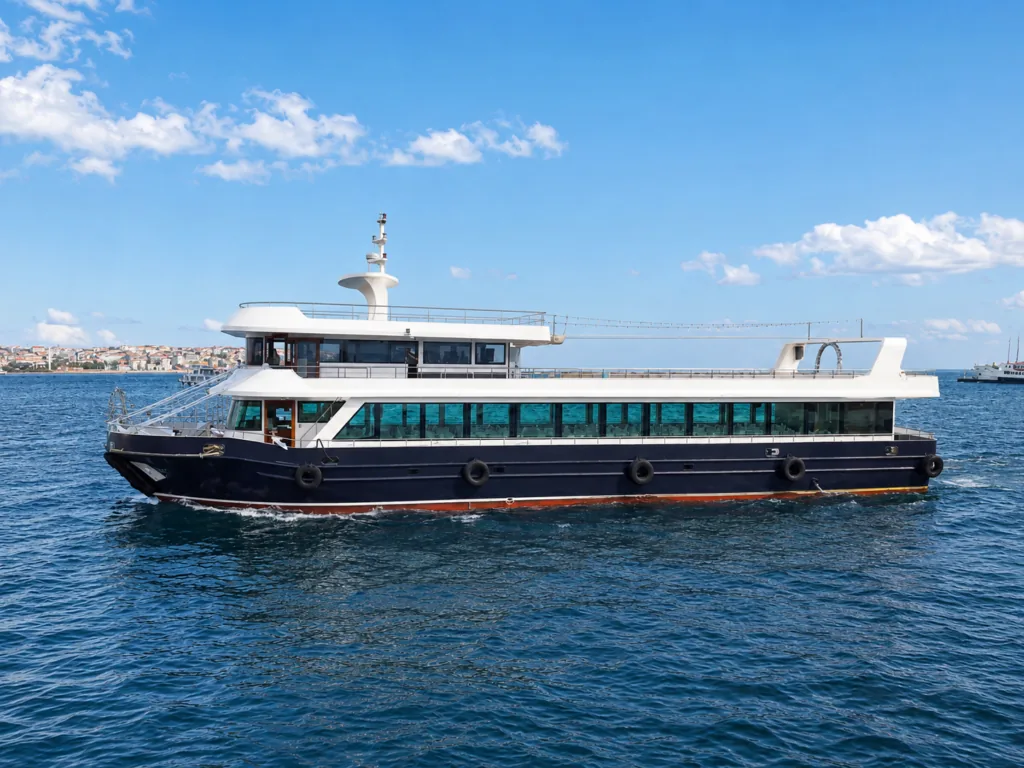
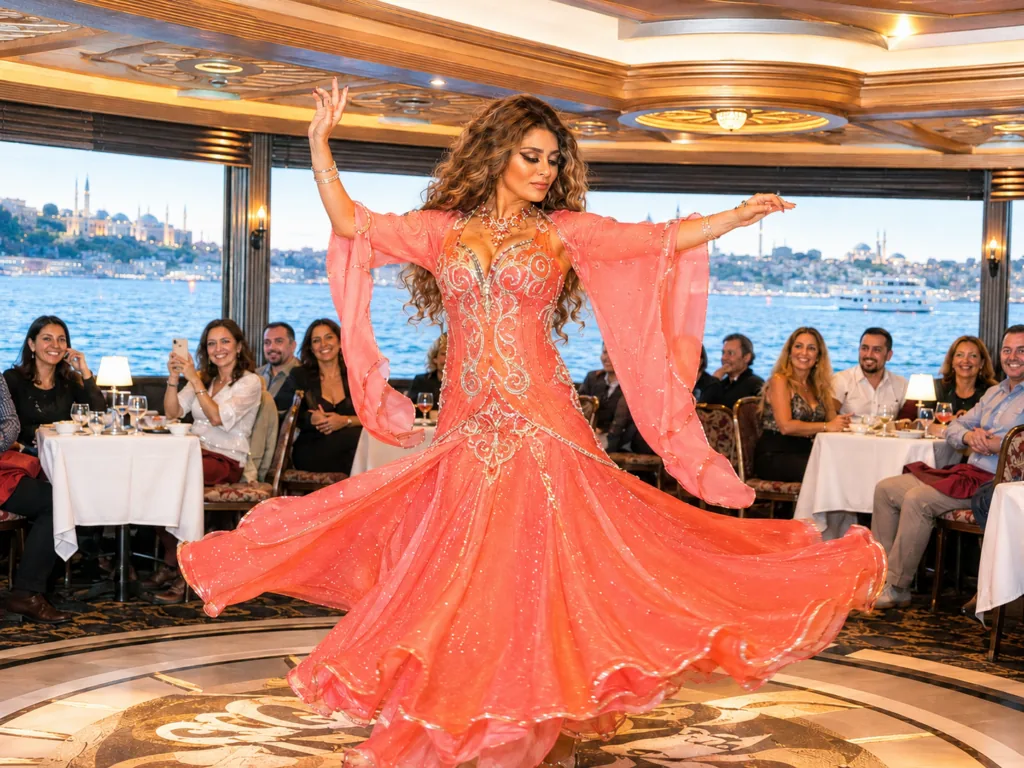
The darbuka player leans forward, the first sharp beat lands, and every conversation in the saloon stops. For the next half hour the Istanbul oriental belly dance show owns the room, danced live on the Bosphorus while the floodlit walls of Dolmabahçe Palace slide past the windows. Nothing about it is recorded or mimed: it is Raqs Sharqi, performed by professional Turkish dancers to a live rhythm section, a few steps from your table.

Istanbul offers plenty of ways to fill an evening. Very few of them tie the music, the city and four centuries of history together as tightly as this one does. On this page you will find what the oriental show actually is, how the Turkish style differs from its Egyptian and Lebanese relatives, where the tradition comes from, exactly when it begins on your cruise, what it costs, and everything worth knowing before you reserve a table.

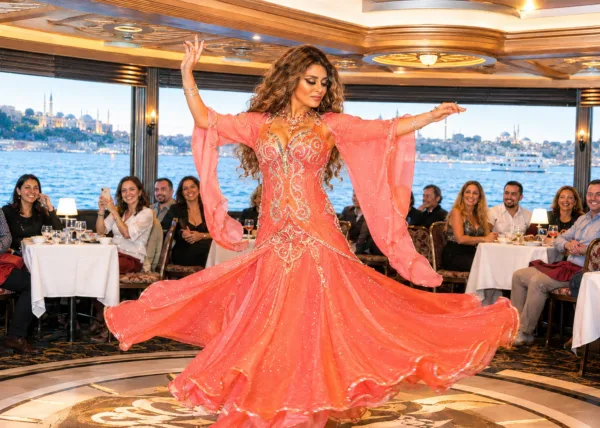
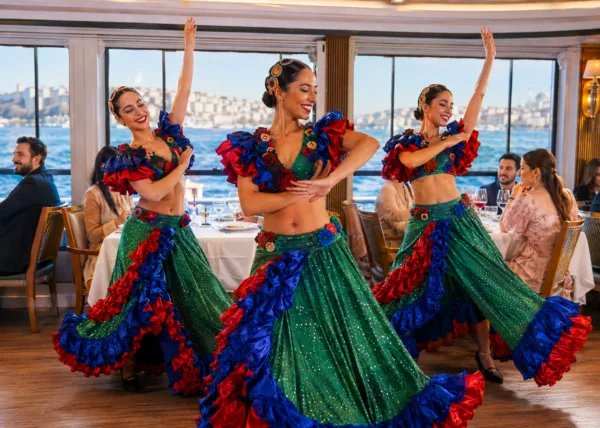
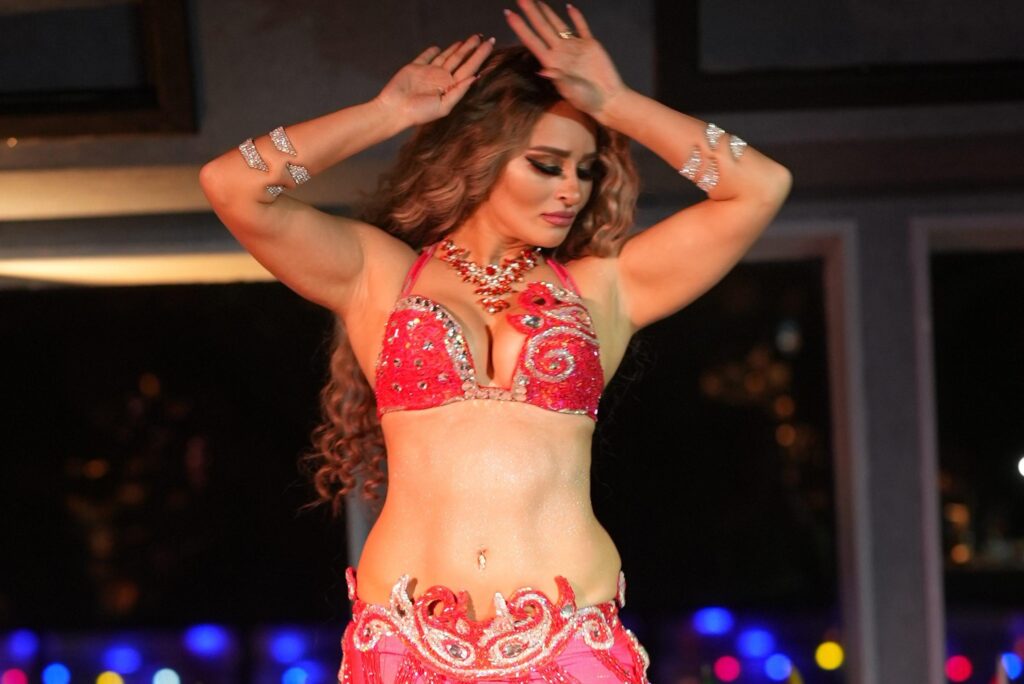
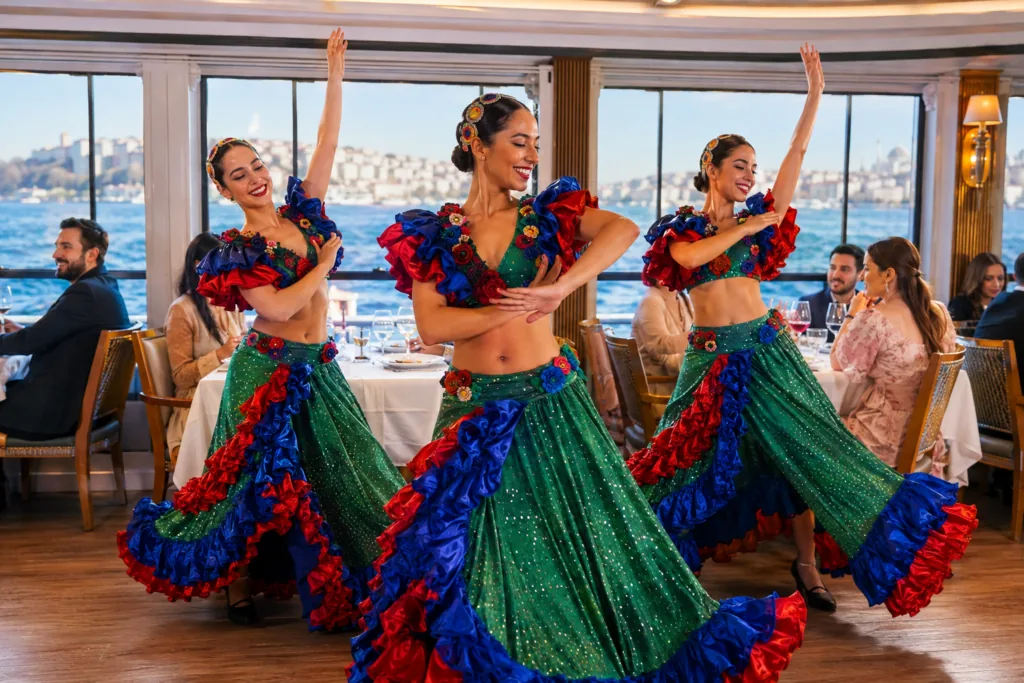
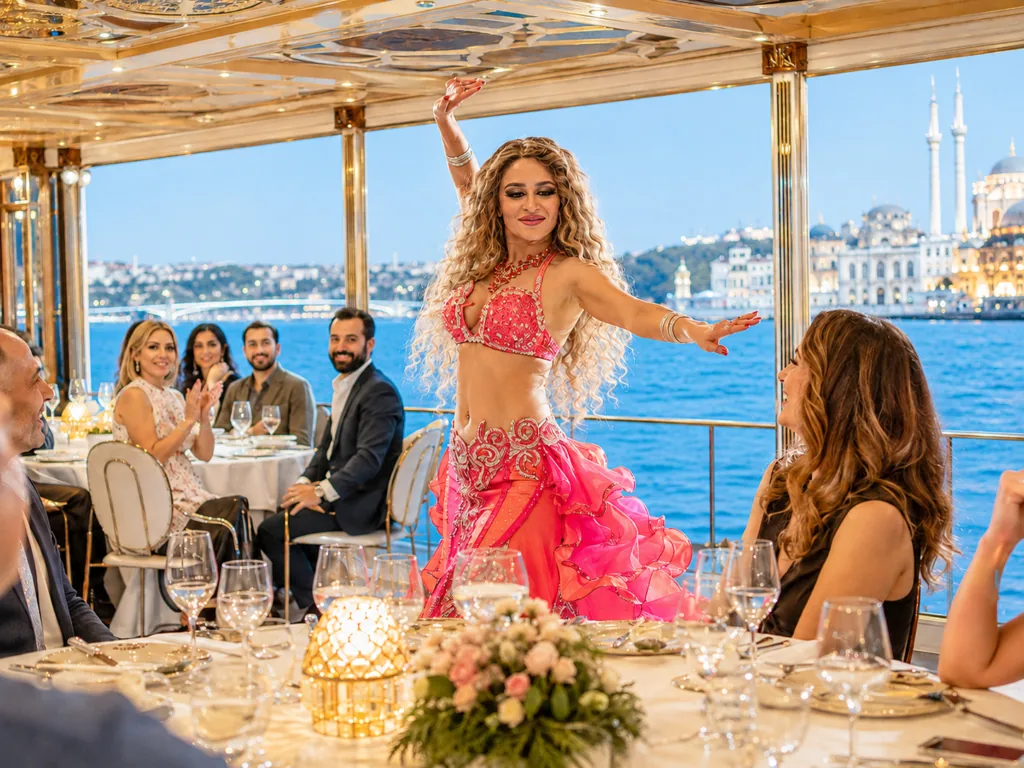
Turkish oriental dancer in a red bedlah costume performing live on an Istanbul Bosphorus cruise
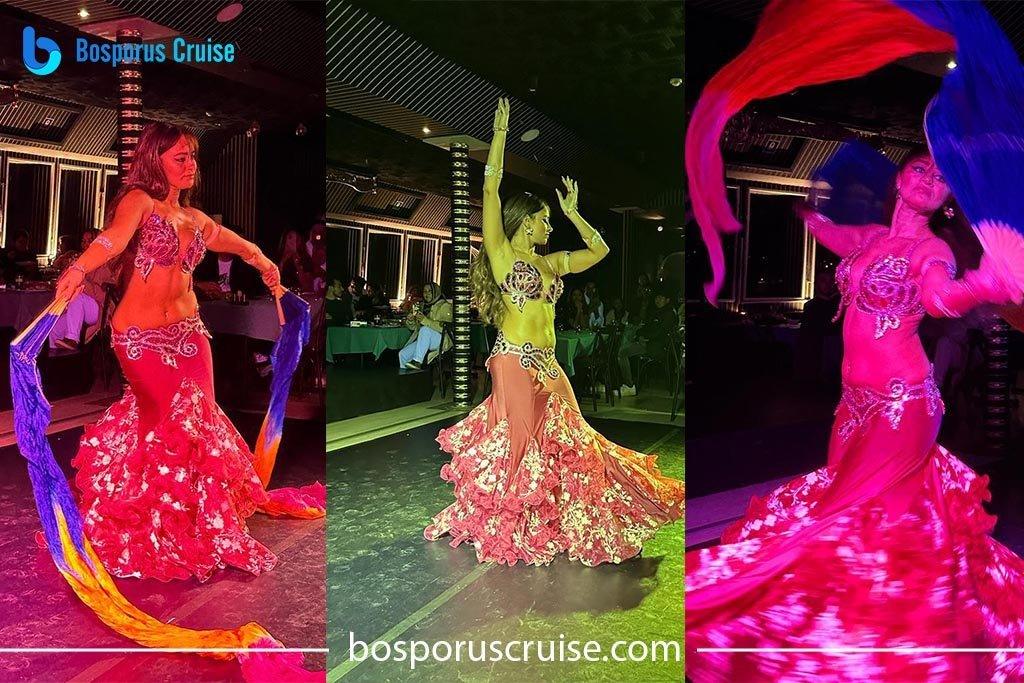
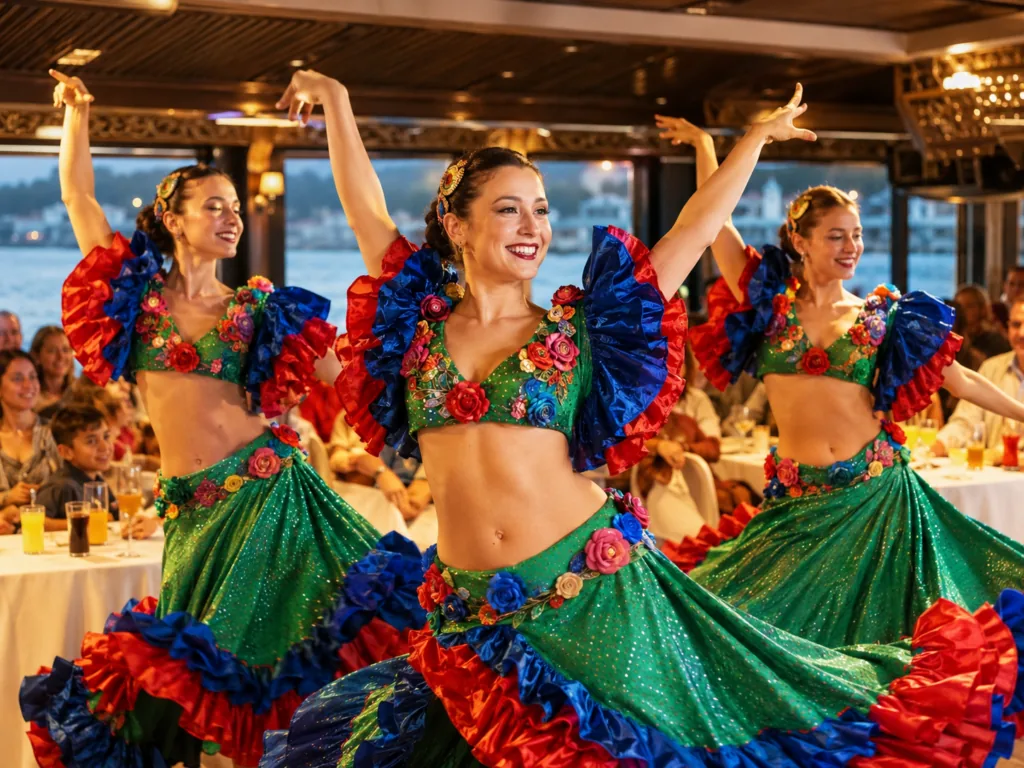
Three oriental show dancers in sequinned costumes under stage lights on a Bosphorus dinner cruise

What Is a Turkish Oriental Show?

An oriental show is a staged performance of Raqs Sharqi, literally the dance of the East, the art form most of the world knows as belly dance. It grew out of the folk and court traditions of the eastern Mediterranean and took on its own character inside Ottoman culture. Calling it simply a dance undersells it: the vocabulary is built on isolations, controlled shimmies, layered hip work and travelling turns that take years of daily practice to control at speed.

What audiences notice first is the musicality. A trained oriental dancer does not move to the music, she answers it, marking the darbuka accents with the hips and the melodic line of the clarinet or kanun with the arms. When the drummer improvises, the dancer improvises back. That conversation between musician and performer is the reason a live show and a video of one feel like completely different things.

Turkish, Egyptian and Lebanese Styles: What Sets Them Apart

Three national schools of the same art, and the differences are easy to spot once you know what to look for

🇹🇷

Turkish Style

Fast, athletic and openly playful. Turkish dancers use big travelling steps, energetic floor work and, above all, zills, the finger cymbals they play themselves while dancing. Improvisation and direct eye contact with the audience are part of the tradition.

🇪🇬

Egyptian Style

More restrained and grounded, with smaller isolations, softer arms and a heavier emphasis on interpreting classical orchestral compositions. Costume rules are stricter and floor work is largely absent from the modern stage.

🇱🇧

Lebanese Style

Sits between the two: the height and glamour of Egyptian staging combined with faster footwork, higher heels, sweeping veil work and a strong pop-music influence from the Beirut club scene.

🎵

What You See On Board

Our performers dance the Turkish school: live darbuka, zills played through the fast sections, and an invitation for guests to join in near the end. It is the most extroverted of the three, and the easiest to enjoy without any background in dance.

From Ottoman Palaces to the Bosphorus: A Short History

The oldest roots of the dance lie in the communal celebrations of the eastern Mediterranean, where circular hip movements belonged to weddings, harvests and rites of passage rather than to any stage. What turned a village celebration into a profession was the Ottoman court.

Cengi and Kocek in the Ottoman Court

By the sixteenth century Istanbul supported organised troupes of professional dancers. The cengi were women who performed for the women of the harem and at weddings and circumcision festivals; the kocek were young male dancers who worked the coffee houses and public celebrations of the city. Both were paid entertainers with guild-like structures, teachers, apprentices and reputations that travelled. Court miniatures from the period show them with zills in hand, and those same finger cymbals are still on stage on the Bosphorus tonight.

From Sulukule to the Modern Stage

After the founding of the Republic, the tradition moved out of the palace and into the city. The Romani neighbourhood of Sulukule, just inside the old Byzantine walls, became the place where visitors went to hear live clarinet and darbuka and watch the dance performed close up. Through the twentieth century the gazino, Istanbul’s grand supper clubs, made oriental dancers into household names. The Bosphorus dinner boats inherited that supper-club format directly: dinner, live musicians, a stage programme and a dance floor at the end.

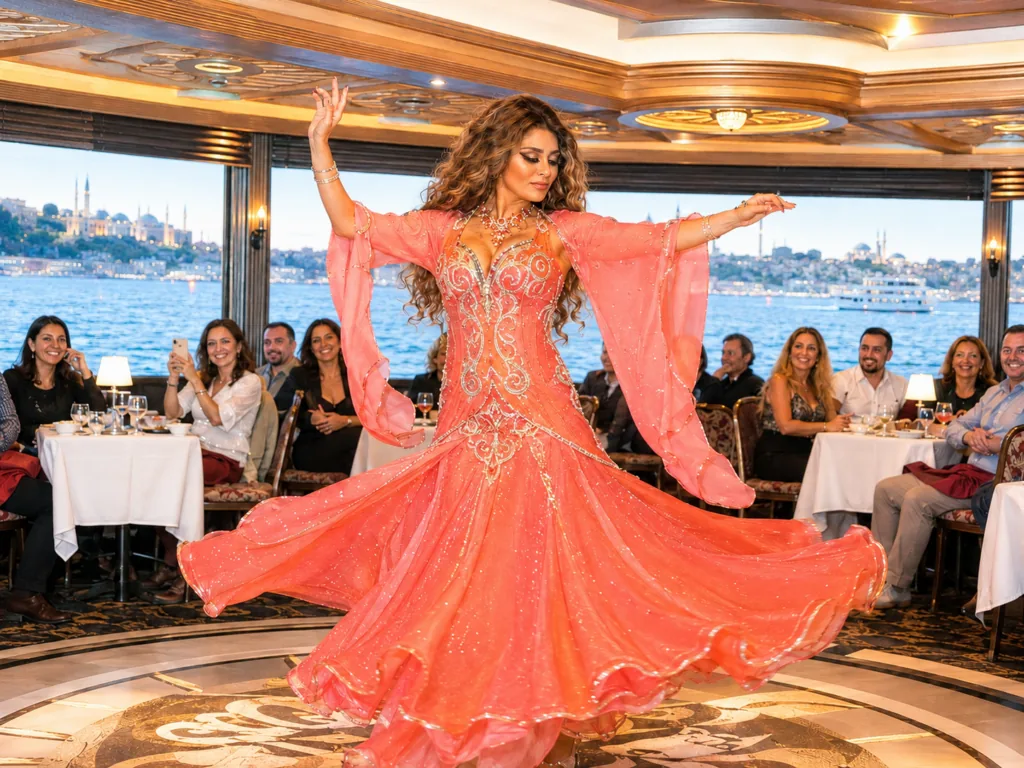
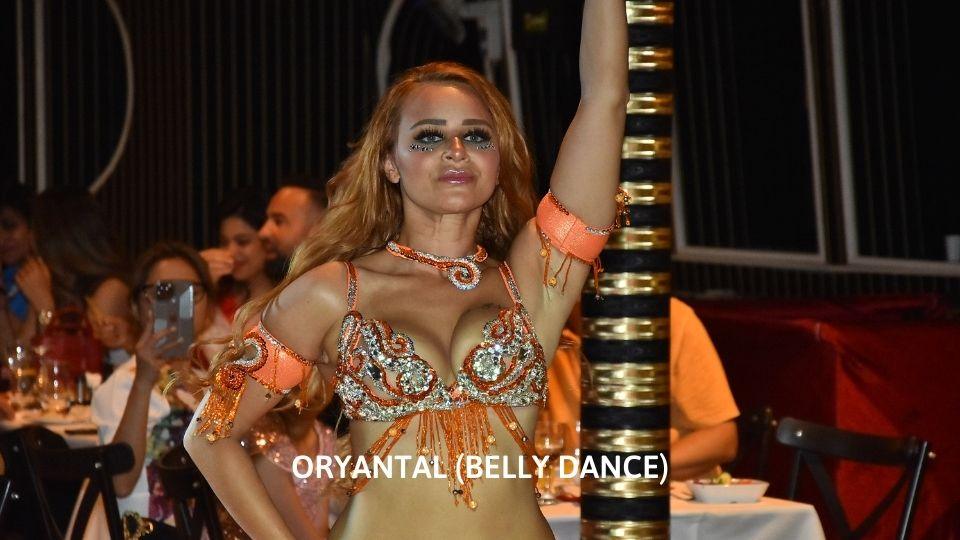
Belly dancer in a gold beaded costume performing among guests at an Istanbul evening show

Inside the Performance: Rhythm, Costume and Craft

Four things to watch for once the lights drop

🥁

The Darbuka Solo

The heart of the set. The percussionist plays an unwritten solo and the dancer answers every accent with a matching isolation. Neither of them knows exactly what the other will do next, which is why the crowd noise always peaks here.

👗

The Bedlah Costume

The two-piece bedlah is hand-beaded, weighs more than it looks and is built to throw light. Watch the fringe: it is deliberately weighted so that a shimmy the eye can barely register turns into a visible wave of movement.

🎼

Zills and Live Music

Four brass finger cymbals, played by the dancer in complex patterns while she dances. Add clarinet, kanun and darbuka and you have the signature sound of the Turkish style, all of it performed live on board.

🙌

Audience Interaction

Towards the end the dancer works the room and invites guests up for a few bars. It is good-humoured, it is short, and it is entirely optional. Nobody is pulled out of a seat they want to stay in.

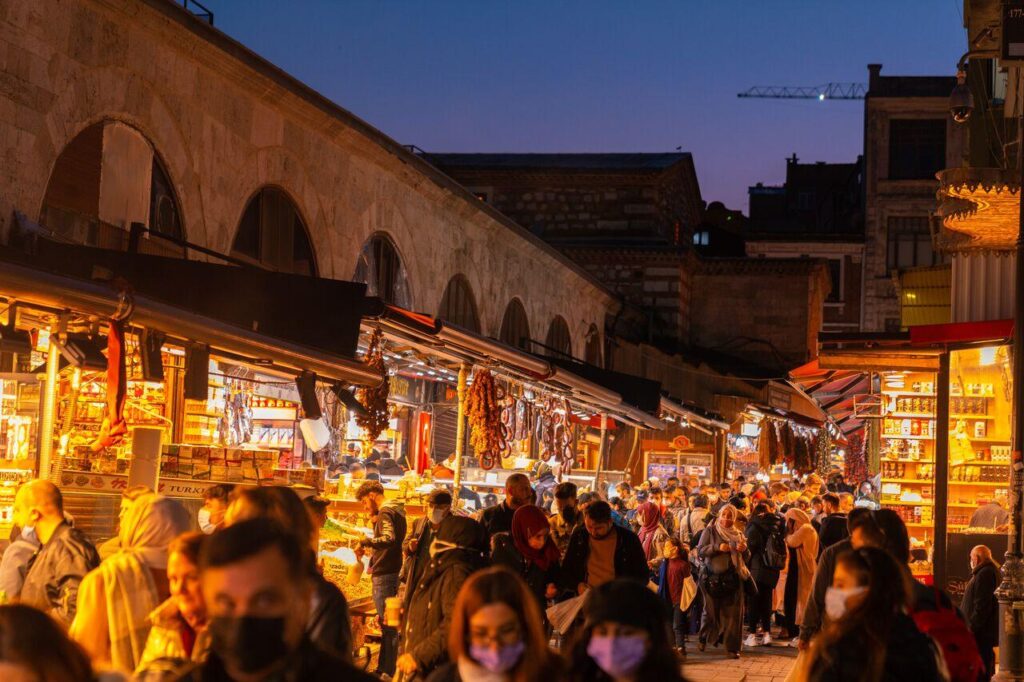
Warmly lit waterfront venue in Istanbul at night, the setting for an oriental show on the Bosphorus

Where to Watch the Best Oriental Show in Istanbul

You can find an oriental show in a Sultanahmet hotel basement, in a Taksim nightclub or in one of the surviving gazino restaurants. Each of those works, and each of them puts you in a windowless room. On a Bosphorus dinner cruise the same performance happens with two continents drifting past the glass.

There is a practical argument as well as a romantic one. The saloon of the boat is built around its stage, so the furthest table is still close enough to see the dancer’s footwork. Most indoor venues seat their late arrivals behind a pillar. And because the show sits inside a three-hour cruise that already includes dinner, drinks and the whole stage programme, you are not paying twice for an evening out and a night view.

On the Water Versus an Indoor Venue

A boat show has one genuine constraint worth knowing: the stage is compact, so the choreography is built for close range rather than for wide travelling patterns. In exchange you get sightlines no theatre can sell you, a live band instead of a backing track, and the option to step onto the open deck between acts. For most visitors that trade is an easy one.

When the Oriental Show Starts on Your Cruise

The oriental set is the centrepiece of a stage programme that runs for about ninety minutes, and it always follows dinner service so nobody watches it over a plate. The schedule below is the standard sailing, every night of the year including Ramadan and public holidays.

If the belly dance is the reason you are booking, plan to be seated well before 22:00. Guests on hotel-transfer packages are collected from their hotel in the early evening (the exact pickup time is in your confirmation); guests meeting the boat directly should be at Kabataş pier by 20:00. The full act-by-act line-up, including the folk dances that follow, is on our entertainment on board page.

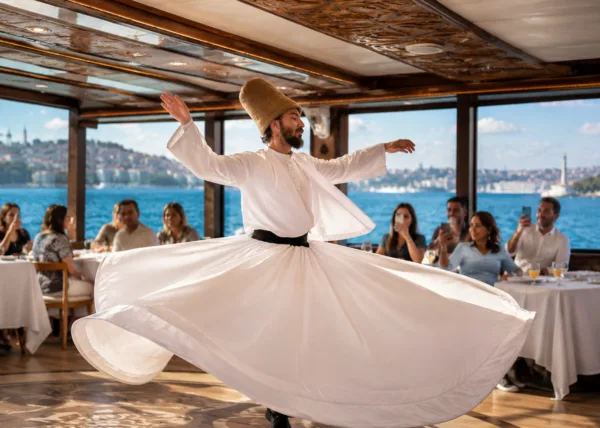
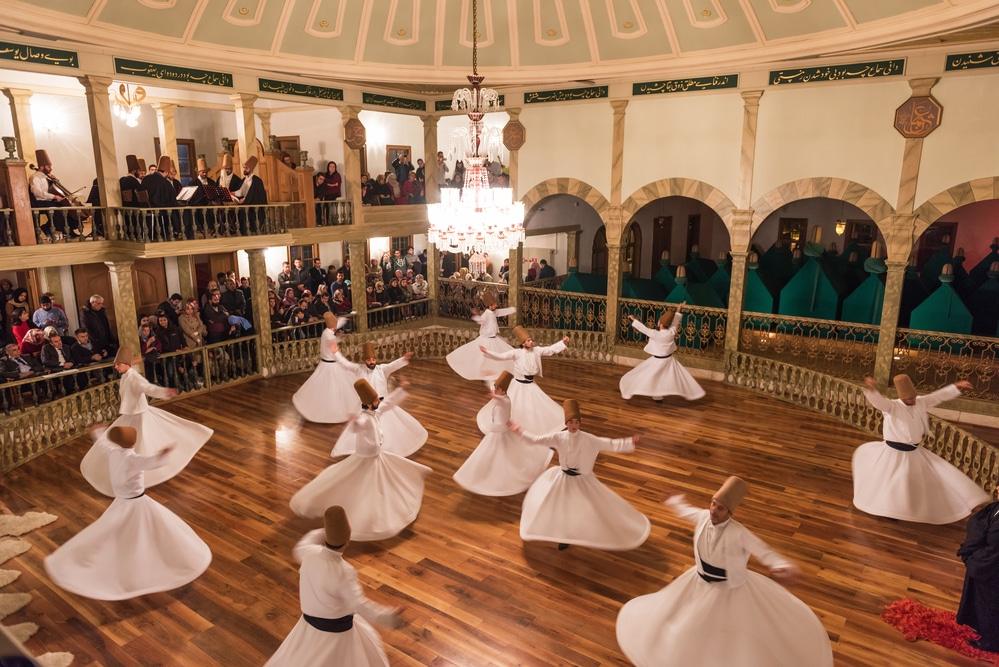
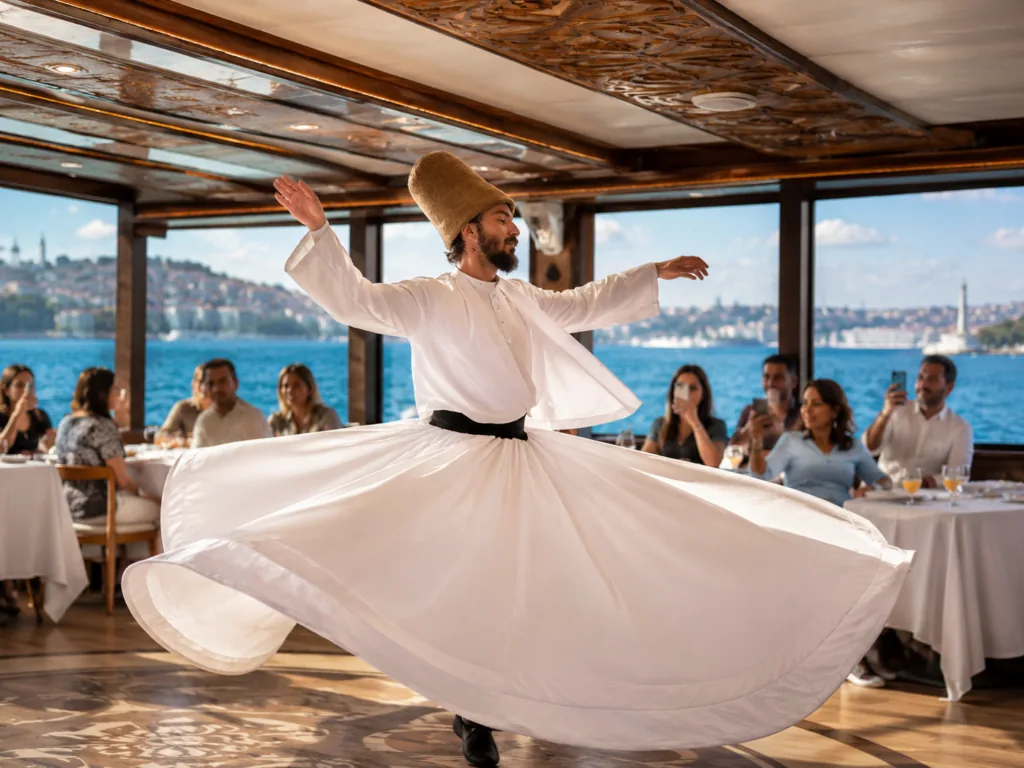
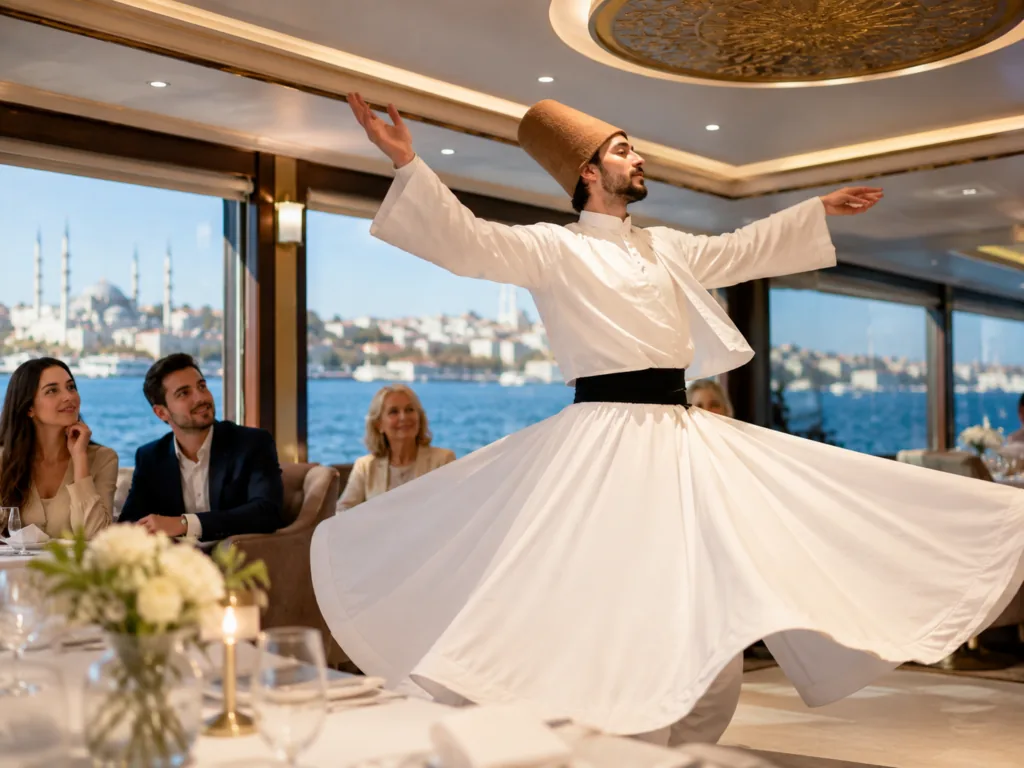
Whirling dervish sema ceremony that opens the stage programme before the Istanbul oriental show
Boarding and Sail-AwayWelcome at your reserved table at Kabataş pier as the boat pulls out past Dolmabahçe Palace.
20:30
Turkish Dinner ServiceMeze, main course and dessert served course by course before the stage programme opens.
20:45
Whirling Dervish SemaThe mystical opening act, performed as the old city slides past the windows.
21:30
Oriental Belly Dance ShowThe darbuka rises and the main performance begins, the energy peak of the night.
22:00
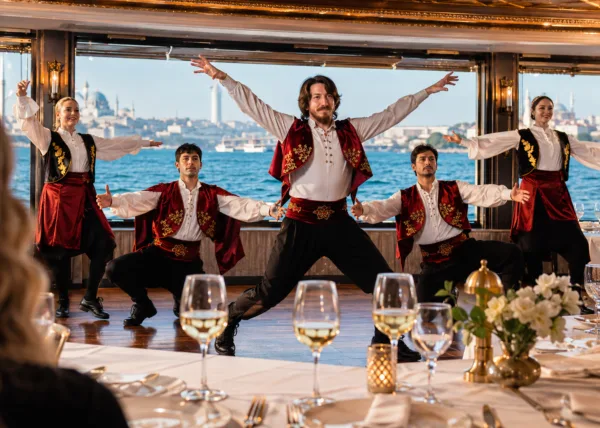
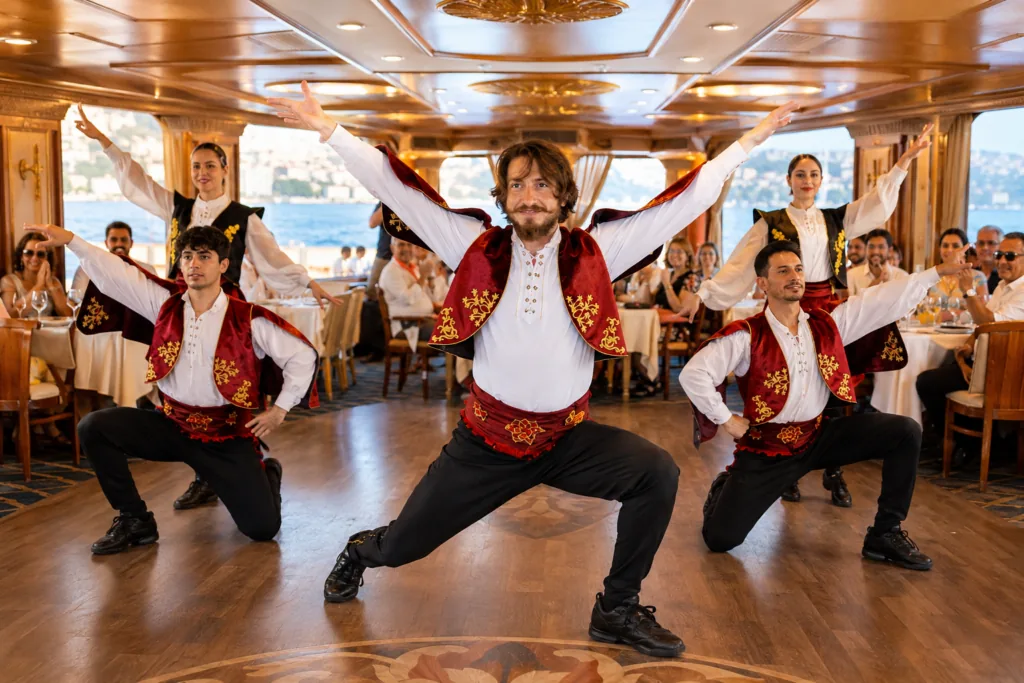
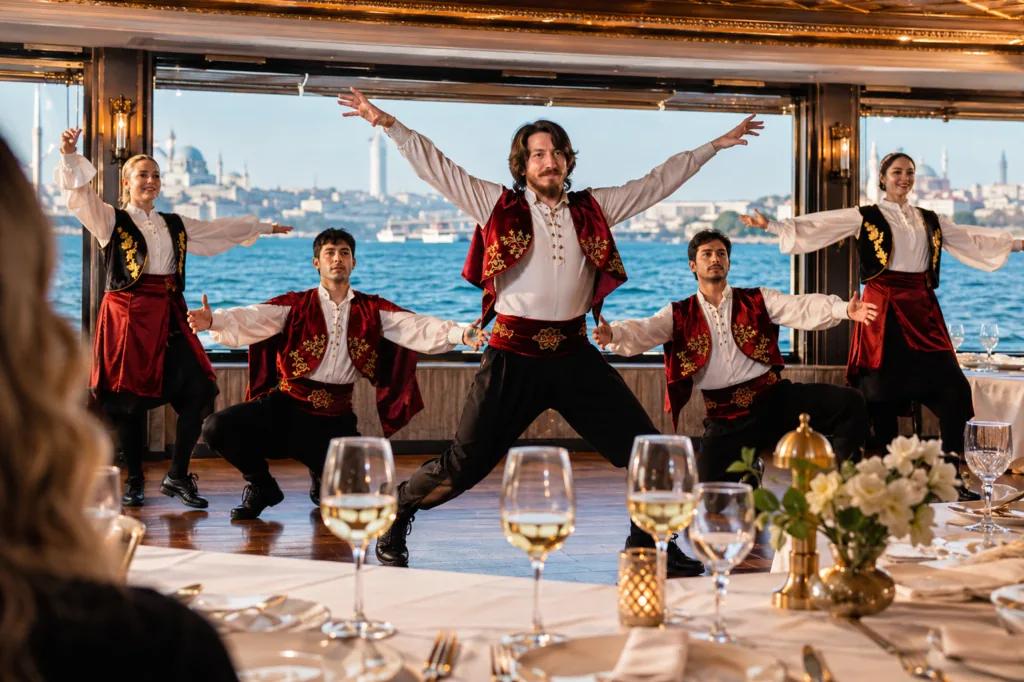
Folk Dances and DJ SetZeybek, halay, horon and Kafkas, closing with an open dance floor as the boat turns for home.
22:30
Return to KabataşBack at the pier, with hotel drop-off for guests on transfer packages.
23:30
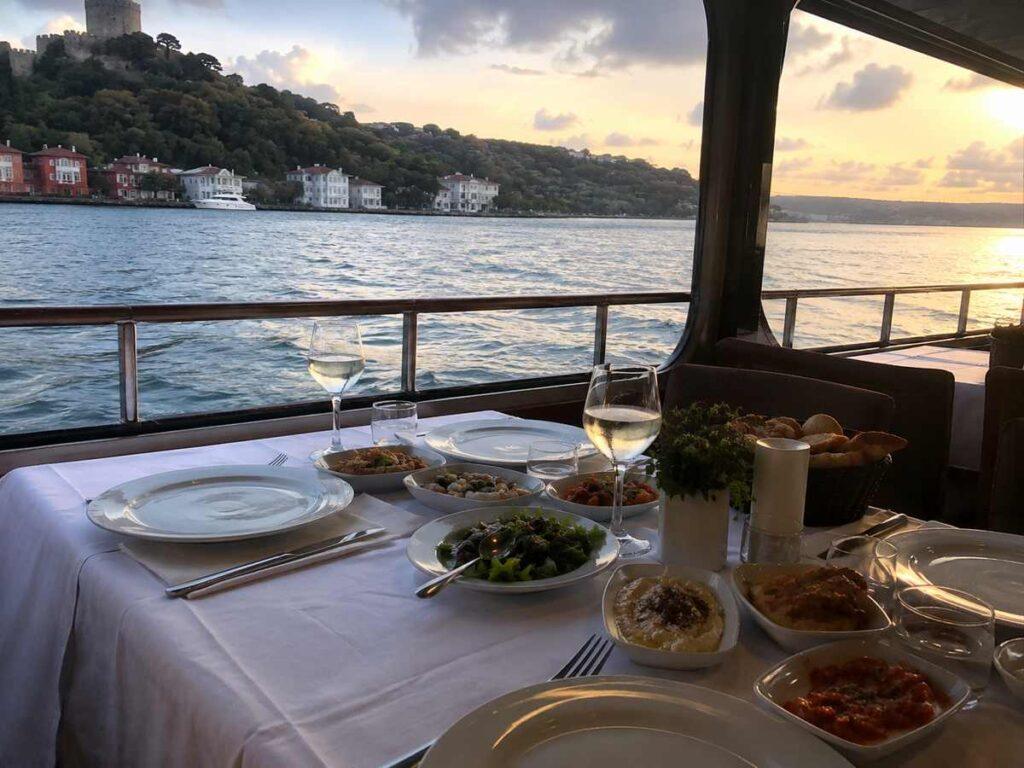
Reserved dinner table with a Bosphorus view where guests watch the Istanbul belly dance show

How Much Does the Oriental Show Cost?

There is no separate ticket for the belly dance show, and that is deliberate. It is part of the stage programme included in every dinner cruise package, so the price you pay is the price of the evening as a whole: dinner, drinks, the full show line-up and three hours on the water.

Packages start at 30 euros per person if you meet the boat at Kabataş yourself, and 40 euros per person with hotel pickup and drop-off included from Fatih, Beyoğlu, Şişli and Beşiktaş. VIP packages seat you at a front-row window table directly facing the stage. Children aged 0 to 3 sail free and ages 4 to 6 pay half price on every package.

No deposit is required, you pay on the boat by card or cash, and cancellation is free up to 24 hours before departure.

Compare the Dinner Cruise Packages With the Show

Every package includes the full oriental show — pick by menu, drinks and table

PackagePrice / personDrinksTransferTable
Standard Menu, meet at port€30 €45Soft drinksMeet at KabataşBosphorus-view
Standard Menu & Alcohol, meet at port€40 €55Local alcoholMeet at KabataşBosphorus-view
Standard Menu & Soft Drinks€40 €55Soft drinksHotel pickup & drop-offBosphorus-view
Standard Menu & Alcoholic Drinks€50 €65Local alcoholHotel pickup & drop-offBosphorus-view
Vegetarian Menu & Soft Drinks€40 €55Soft drinksHotel pickup & drop-offBosphorus-view
VIP Menu & Soft Drinks€100 €130Soft drinksHotel pickup & drop-offFront-row VIP, facing the stage
VIP Menu & Alcoholic Drinks€120 €150Local alcoholHotel pickup & drop-offFront-row VIP, facing the stage

For the best view of the oriental show specifically, the VIP packages are worth the difference — the front-row window tables face the stage runway directly, so both the skyline and the dancer stay in your frame all night. Unsure which table suits your group? Ask us on WhatsApp before you book.

What Is and Is Not Included

The show comes with the cruise, not as a separate ticket

Included

  • ✓ Professional Turkish oriental show with live darbuka
  • ✓ Whirling dervish sema and Anatolian folk dances
  • ✓ Multi-course Turkish dinner at a reserved private table
  • ✓ Three-hour night cruise between Europe and Asia
  • ✓ Live DJ set and open dance floor to close the night
  • ✓ Hotel pickup and drop-off on transfer packages

Not Included

  • ✕ The show is not sold as a stand-alone ticket
  • ✕ Souvenir prints from the on-board photographer
  • ✕ Extra drinks beyond your package and personal expenses
  • ✕ Tips for the dancers and musicians, always optional

Seats, Photos and Etiquette: Getting the Most Out of the Show

Small decisions that change how the evening feels

🎬

Where to Sit

Every package includes a reserved table, so nothing is first-come. VIP tables sit window-side at the front of the stage, which is the seating guests pick for birthdays and anniversaries. Standard tables still face the stage directly across a compact saloon.

📷

Photography

Stage lighting is warm and low. Turn the flash off, raise your ISO and shoot during the slower melodic passages rather than the fast shimmies. Video is welcome; the darbuka solo records far better than it photographs.

👗

What to Wear

Smart casual, with no formal dress code anywhere on board. Bring a light jacket or shawl: the open deck is noticeably breezier than the city, even in midsummer.

🙏

Etiquette

Applause during the drum solo is expected and welcome. Stay clear of the stage edge while the dancer is travelling, and if you are invited up and would rather not, a smile and a wave is a perfectly normal answer.

Is the Belly Dance Show Family Friendly?

Yes. The oriental show performed on board is a cultural stage act, not a nightclub number: the costume is traditional, the choreography is classical, and the tone through the whole set is closer to a folk-dance ensemble than to anything adult. Families make up a large share of every sailing, and the audience-interaction section at the end is usually the part children remember.

For families travelling without alcohol, the soft-drink packages serve no alcohol at your table at all, which is why they are the most popular choice for groups with children. A kids menu is available on request, and children aged 0 to 3 travel free.

Private Oriental Shows for Events and Charters

Beyond the scheduled dinner cruise, a private oriental performance can be arranged on a chartered boat for a birthday, a corporate evening, a wedding celebration or a proposal. You choose the length of the set, whether the darbuka player performs alone or with a full band, and how much audience interaction you want. See our group and private events and yacht charter pages, or message us directly for a quote.

Plan a Private Show on WhatsApp

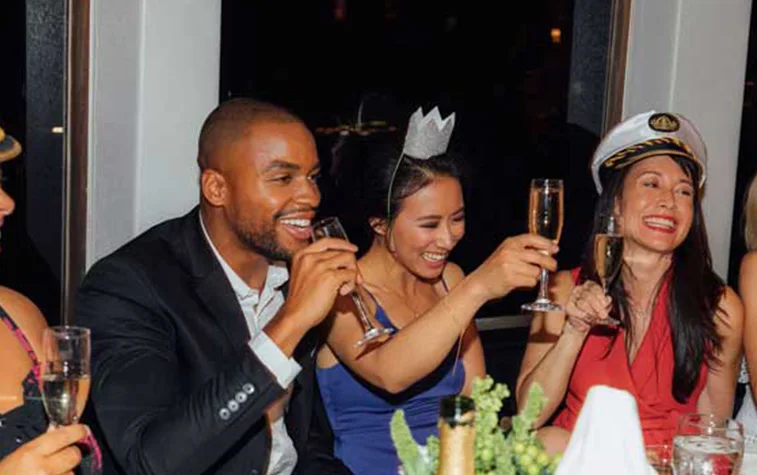
Guests toasting at an evening celebration on board with a private oriental show booked

Book Your Istanbul Oriental Show Evening

One booking covers dinner, the cruise and the full stage programme

Book the Dinner Cruise with Oriental Show· from 30 euros per person · pay on the boat

Prefer to ask first? Get an offer or read the full frequently asked questions. Curious about the rest of the programme? The whirling dervish show opens the night, and all our Bosphorus experiences are listed here.

Frequently Asked Questions About the Istanbul Oriental Show

Yes. The on-board oriental show is a traditional cultural performance with classical choreography and traditional costume, and families make up a large share of every sailing. Children aged 0 to 3 travel free, ages 4 to 6 pay half price, and a kids menu is available on request.
No, the show is performed exclusively on board during the evening cruise and is not sold as a separate ticket. The lowest-cost way to see it is the standard meeting-point package at 30 euros per person, where you join the boat at Kabataş pier instead of taking the hotel transfer.
The oriental show begins at 22:00, after dinner service and the whirling dervish sema. Boarding starts around 20:00, the boat sails at 20:30 and returns to Kabataş at 23:30, so plan to be seated well before 22:00 if the belly dance is your main reason for booking.
The oriental set runs for roughly 30 minutes, from 22:00 to 22:30. It sits inside a stage programme of about 90 minutes that also includes the whirling dervish ceremony, Turkish folk dances and a closing DJ set.
Turkish style is faster, more athletic and more improvised, with large travelling steps, floor work and finger cymbals called zills played by the dancer herself. Egyptian style is more grounded and restrained, with smaller isolations, softer arm lines and no floor work on the modern stage.
Live. A darbuka player and accompanying musicians perform on board, and the drum solo in the middle of the set is improvised on the night, with the dancer answering each accent as it lands.
Yes, photography and video are welcome. Turn your flash off, as it disturbs the performers and washes out the stage lighting. The warm, low light on board favours a higher ISO and shots taken during the slower melodic passages.
Yes. Private performances can be arranged on chartered boats for birthdays, corporate evenings, weddings and proposals, with the length of the set and the size of the music ensemble chosen by you. Contact us or message us on WhatsApp for a tailored quote.
Packages start at 30 euros per person when you meet the boat at Kabataş and 40 euros per person with hotel pickup and drop-off included. Every package covers dinner, the cruise and the complete stage programme; no deposit is needed and cancellation is free up to 24 hours before departure.
Yes. The dinner cruise and its full stage programme sail every evening of the year, including Ramadan and public holidays, and operate rain or shine from heated, air-conditioned indoor saloons.
Bosporus Cruise Boarding point: Kabataş Pier, Beyoğlu, Istanbul, Turkey Reservations & WhatsApp: +90 501 335 65 11 Phone: +90 850 303 25 26 E-mail: [email protected] Daily 09:00 – 23:00