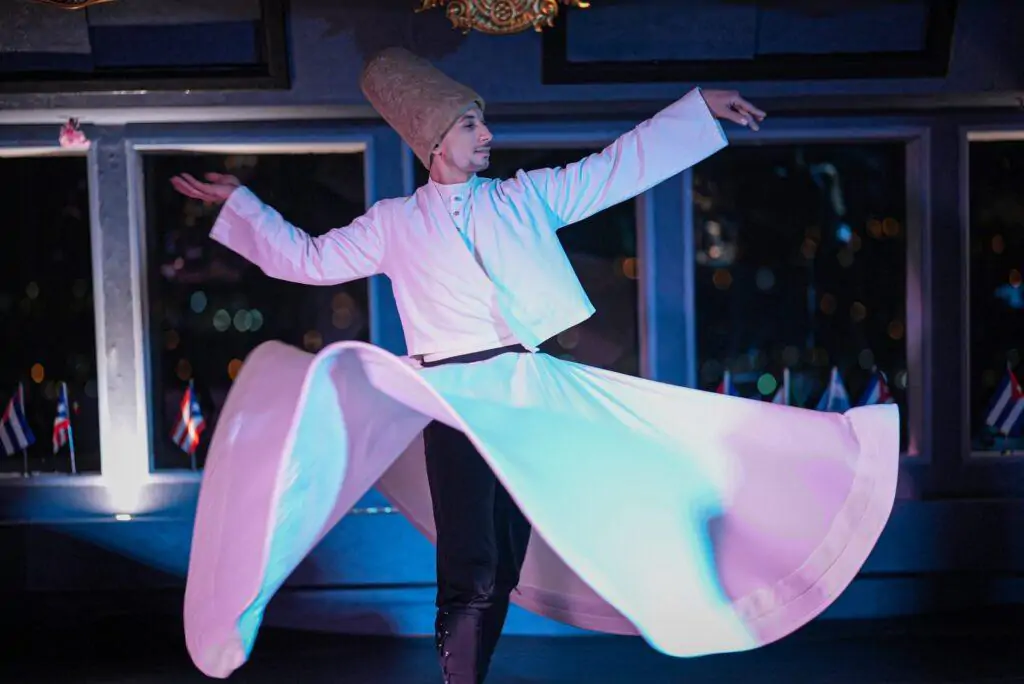
You step into a space where time seems to slow down entirely. The modern noise of Istanbul fades into the background. A deep, rhythmic chant sets the foundation while the solitary wail of the reed flute commands the room. This auditory landscape prepares your mind for the visual poetry of the whirling dervish ceremony about to unfold.
The dancers enter with their heads bowed in profound humility. Their movements are deliberate and slow, carrying the weight of an 800 year old tradition. Tourists often expect a high-energy folklore show at the start of the night. Instead, they find themselves captivated by a moving meditation that calms the mind and stirs the soul.
Who Are the Whirling Dervishes of Turkey
These performers are followers of a mystical branch of Islam known as Sufism. They are not simply dancers hired for an evening of entertainment. They are practitioners of a deep spiritual path that emphasizes love, tolerance, and abandoning the ego. The physical act of turning is their way of connecting with the divine.
Historically, these individuals lived in special lodges called Tekkes. They dedicated their lives to studying poetry, music, and theology. Today, they continue to preserve these ancient teachings with great discipline. Watching an istanbul whirling dervish means witnessing a living piece of spiritual history.
The Life and Teachings of Mevlana Jalaluddin Rumi
You cannot understand this ritual without knowing the man who inspired it. Mevlana Jalaluddin Rumi was a 13th-century poet, scholar, and mystic who lived in the Anatolian city of Konya. His core message was incredibly simple yet powerful, focusing entirely on universal love and acceptance. He believed that music and dance were pathways to reach a higher state of consciousness.
Rumi’s poetry transcends religious and cultural borders. Millions of people read his words all over the world today. The Sema ceremony meaning is completely rooted in his philosophy of spiritual ascent. The dancers physically manifest the journey of the soul that Rumi described in his thousands of verses.
The Origins of the Sufi Dance in the Ottoman Empire
The ritual as we know it today was formalized after Rumi’s passing by his followers. The Mevlevi Order, as they became known, grew into a highly respected institution. They established lodges across the vast geography of the empire, from the Balkans to the Middle East. They became the spiritual and artistic heart of the Ottoman society.
Sultans often patronized these lodges and financially supported the dervishes. The elegant architecture of historical lodges is a testament to their high status in society. The sophisticated choreography of the spiritual dance performance was perfected within these walls. It evolved from a spontaneous act of devotion into a highly structured classical art form.
Understanding the Sema Ceremony Meaning
The performance you watch on the boat is actually a profound meditation known as Sema. It represents a mystical journey of humanity’s spiritual ascent through mind and love to perfection. This is not merely a choreography designed for visual entertainment. It is a highly disciplined ritual representing the core of Sufism in Turkey where every single movement holds a specific cosmic significance.
The dancer aims to abandon their personal ego and desires to reach a state of absolute harmony with the universe. Everything in nature revolves, from the planets to the blood in our veins. The spinner consciously joins this universal rotation to connect with the divine. You are witnessing a deep prayer in motion rather than a theatrical act.
The Four Stages of the Spiritual Journey
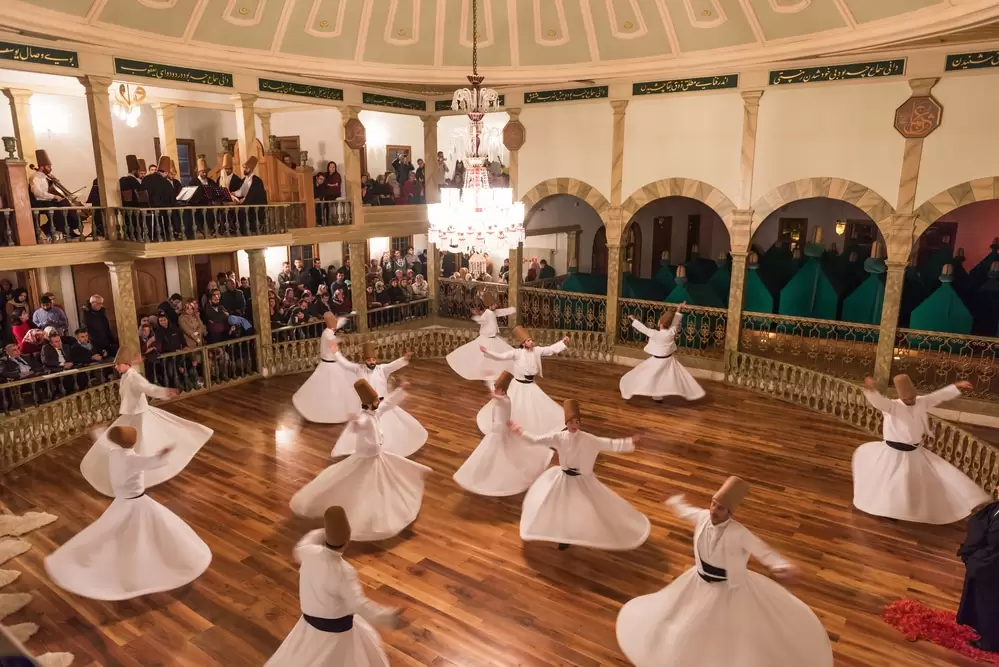
The ritual progresses through four distinct spiritual phases. It begins with the performer realizing their servitude to the divine creator. The second stage expresses the sudden rapture of witnessing the magnificent grandeur of creation. The third stage transforms this rapture into pure love and complete spiritual submission.
The final stage is perhaps the most important part of the entire ritual. It brings the whirling dervish back to their earthly reality from their spiritual trance. They return to the ground as a more mature and enlightened human being. Their ultimate goal is to serve all of creation with a heart full of unconditional love.
The Physical Technique Behind the Whirling
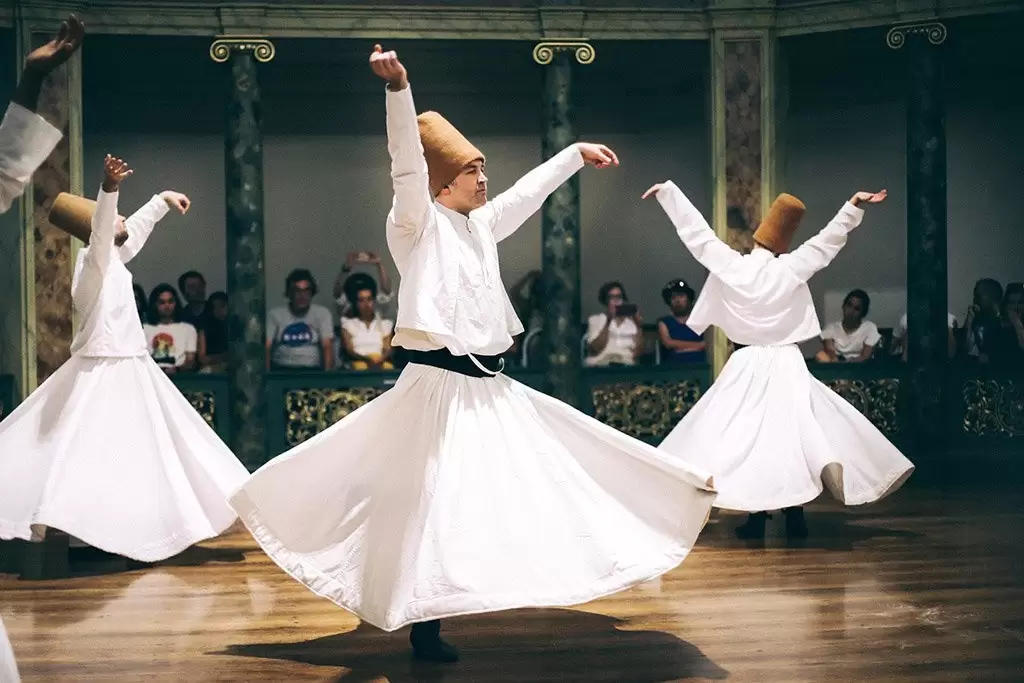
The physical execution of this ritual requires immense focus and years of rigorous training. The performer keeps their left foot firmly rooted to the floor like a steady axis. They use their right foot to propel their body in a continuous counterclockwise spin. Their arms open wide like wings during the Sufi dance to act as a spiritual conduit.
The position of their hands is highly symbolic and deeply intentional. The right palm faces the sky to receive divine grace from above. The left palm faces the earth to pass that heavenly grace down to humanity. They never hold onto the energy for themselves. They act purely as a channel of love between the creator and the world.
Why Dervishes Do Not Get Dizzy During the Spin
Guests often wonder how the performers can spin continuously without collapsing from severe dizziness. The secret lies in a combination of ancient physical technique and intense mental focus. The dancer slightly tilts their head to the right while rotating. This posture aligns their inner ear balance in a specific way to prevent nausea.
They also fix their gaze on a specific point on their left thumb instead of looking at the spinning room. This visual anchor keeps their brain grounded while their body turns. This specific training allows the whirling dervish ceremony to continue flawlessly for long periods. It is a perfect balance of physiological mastery and spiritual concentration.
Symbolism in Traditional Dervish Clothing
When you watch the performers take the stage, their garments immediately capture your attention. These are not merely theatrical costumes designed for an aesthetic show. Every piece of traditional Dervish clothing carries a profound metaphorical weight related to the death of the ego. The dancer is literally wearing a story of spiritual rebirth. Understanding this visual language completely changes how you experience the performance.
The Sikke Hat and the Tombstone of the Ego
The tall brown hat resting on the performer’s head is known as a sikke. It represents the tombstone of the dancer’s worldly desires and personal ego. This is the first powerful symbol you will notice before the whirling dervish show even begins. Wearing it signifies that the person has committed to burying their selfish nature. It stands as a constant reminder of spiritual humility throughout the entire ritual.
The Black Cloak and the Worldly Grave
The dancers enter the space wrapped tightly in a heavy dark garment called a hirka. This black cloak symbolizes the dark earth of the grave and the physical world we live in. You will see a dramatic moment where the performer suddenly drops this cloak to the floor. This powerful gesture represents their spiritual rebirth into the truth. It is the exact moment they leave their worldly attachments behind to begin the Sufi dance.
The White Robes and the Shroud of the Ego
Underneath the dark cloak lies the iconic flowing dress known as the tennure. These sikke hat and white robes create the mesmerizing visual effect when the spinning starts. The white fabric specifically represents the burial shroud of the ego. The skirt blooms outward into a perfect circle as the dancer gains speed. This flawless geometry symbolizes the purity and perfection of the soul reaching toward the divine.
The Hypnotic Music of the Sufi Ritual
You cannot separate the visual beauty of the spinning from the haunting melodies that accompany it. The music acts as the heartbeat of the entire performance. It guides the dancer and the audience into a shared state of deep meditation. This auditory experience is what elevates a simple spiritual dance performance into a profound emotional journey.
The traditional ensemble consists of highly trained musicians and vocalists known as the mutrip. They sit quietly on the edge of the stage and wait for the exact moment to begin. Their instruments do not merely play notes for entertainment. They recite poetry and prayers that have echoed through the centuries.
The Role of the Ney Flute
The most distinctive sound of the ceremony comes from the Ney flute. This simple reed instrument carries an incredibly sorrowful and breathy tone. Rumi famously compared the hollow reed to the human soul in his poetry. The flute cries because it was cut from its original reed bed and longs to return home.
The solo performance of the Ney usually opens the entire ritual. This haunting melody commands absolute silence in the room. It represents the divine breath of the creator giving life to humanity. Listening to this ancient instrument during a cultural performances Turkey program connects you instantly to the past.
Rhythmic Drums and Spiritual Chanting
A sharp strike on the small kettledrum known as the kudum suddenly breaks the silence of the flute. This powerful beat represents the divine command of creation. The rhythm provides the steady foundation that allows the dancer to maintain their balance. It acts as the metronome for the whirling dervish ceremony from start to finish.
A chorus of vocalists joins the instruments shortly after the drumbeat starts. They sing classical poems written by Rumi in a deep and resonant chant. Their voices rise and fall in harmony with the spinning motion of the dancers. This continuous chanting creates the hypnotic atmosphere that captivates every spectator in the room.
Frequently Asked Questions About Whirling Dervishes & Sufis’
What is the meaning of the Whirling Dervish dance? The dance, known as the Sema ceremony, is not just a performance but a deep spiritual meditation. It represents a mystical journey of humanity’s spiritual ascent. By spinning, the dervish abandons their ego and desires, aiming to reach a state of perfect harmony with the universe and the divine.
What do the Whirling Dervish costumes symbolize? Every garment tells a story of the ego’s death and spiritual rebirth. The tall brown hat (sikke) represents the tombstone of the ego. The black cloak (hirka) symbolizes the worldly grave. When the dervish removes the black cloak to reveal the white robes (tennure) underneath, it signifies emerging from the grave of the ego in a spiritual shroud, ready for the truth.
Why is one hand up and one hand down during the dance? The hand positions are deeply symbolic of the dervish’s role as a conduit. The right palm faces the sky to receive divine grace from the Creator. The left palm faces the earth to transmit that grace down to humanity. This shows that the dervish holds nothing for themselves, acting only as a channel for divine love.
Who are the Whirling Dervishes? Whirling Dervishes are followers of Sufism, a mystical branch of Islam. Historically, they lived in lodges called Tekkes and dedicated their lives to studying poetry, music, and theology. They follow the teachings of the 13th-century mystic Mevlana Jalaluddin Rumi, focusing on universal love, tolerance, and discipline.
What musical instruments are used in the Sema ceremony? The music is central to the ritual and includes a choir and specific instruments. The most distinct is the Ney (reed flute), which symbolizes the human soul’s longing for the divine. The rhythm is kept by the Kudum (small kettledrums), representing the divine command of creation.
Source: Wikipedia
