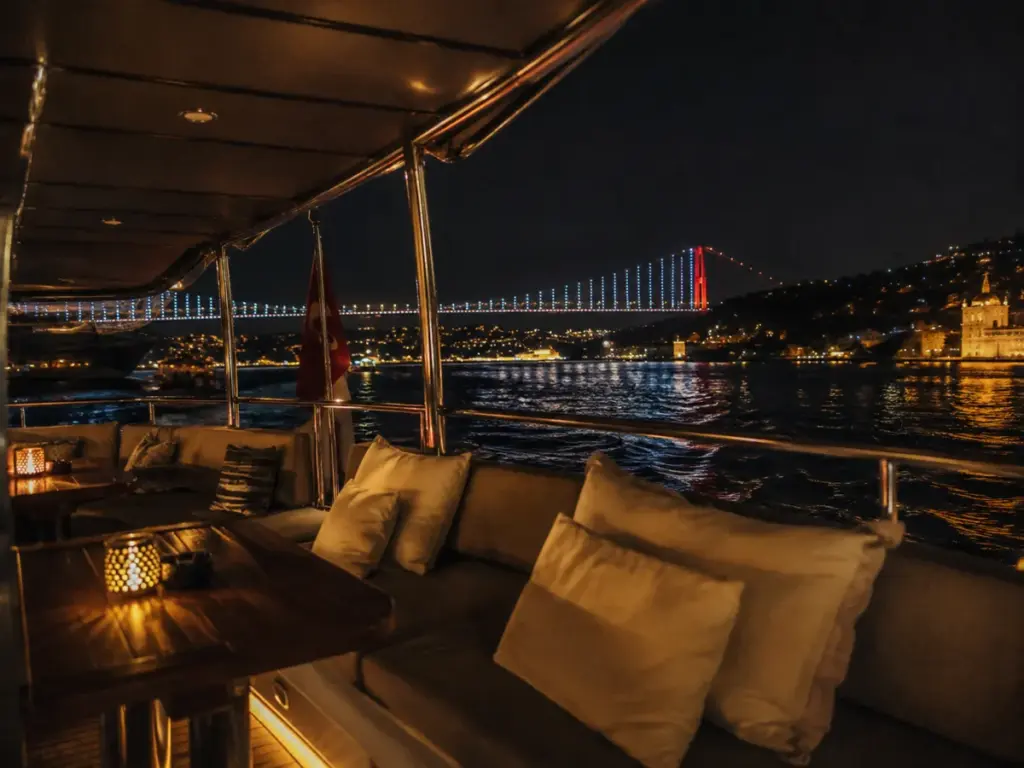
From the deck of a boat you can see four Ottoman palaces in a single afternoon, Dolmabahçe, Çırağan, Beylerbeyi and the little Küçüksu Pavilion, plus Topkapı rising over Seraglio Point where the strait opens into the Sea of Marmara. The sultans built these palaces to be admired from the water, which is why their grandest facades turn toward the strait and their marble landing stairs run straight down to it. Standing on land you see gates and garden walls. From the water you see the buildings the way their architects intended, whole, symmetrical and mirrored in the current. This piece walks you through each palace in the order a cruise from the European docks passes them.
Which Palaces Can You See From a Bosphorus Cruise?
A standard cruise route covers five royal buildings without a single extra stop. Here is the running order, heading north from the mouth of the strait.
| Palace | Shore | What to look for |
| Topkapı Palace | European, Seraglio Point | Pavilions and cypresses crowning the headland |
| Dolmabahçe Palace | European | A 600 metre marble facade and ornate water gates |
| Çırağan Palace | European | Carved marble front, now a five star hotel |
| Beylerbeyi Palace | Asian | White summer palace tucked under the first bridge |
| Küçüksu Pavilion | Asian | A small rococo lodge beside the Göksu stream |
Topkapı Palace and Seraglio Point
The first royal silhouette you pass is the oldest. Topkapı was home to the sultans for almost four centuries, and it does not sit on the Bosphorus so much as command it, spread across the headland where the strait, the Golden Horn and the Marmara meet. From the water you read the palace as the Ottomans’ enemies once did, a fortified hill of kitchens, towers and garden pavilions above the sea walls. Watch for the pointed roof of the Baghdad Pavilion peeking through the trees.
Dolmabahçe Palace From the Water
Nothing on the strait prepares you for Dolmabahçe. Built in the 1850s when Sultan Abdülmecid decided the empire needed a European style residence, it stretches roughly 600 metres along the shoreline, all white marble, sculpted gates and crystal behind the windows. The boat glides past slowly enough to take in the clock tower at one end and the ceremonial water gate at the centre, where guests once stepped off imperial caiques. Atatürk spent his final days here, which is why the palace still carries a quiet weight for Turkish visitors. On land you queue for a ticket. From the water the whole facade belongs to you.
Çırağan Palace and the Feriye Row
A few minutes north comes Çırağan, built for Sultan Abdülaziz in the 1860s and gutted by fire in 1910. Its carved marble shell stood empty for decades before being reborn as one of the city’s most exclusive hotels, so today you cruise past honeymoon suites where princes once lived. Just beyond it runs the Feriye row, a line of lesser palace buildings that now house schools and restaurants. The stretch between Dolmabahçe and the first bridge is the closest the Bosphorus comes to a royal avenue.
Beylerbeyi Palace on the Asian Shore
Cross to the Asian side, and almost beneath the deck of the 15 July Martyrs Bridge sits Beylerbeyi, the sultans’ summer palace. Abdülaziz built it in the 1860s as a guesthouse for visiting royalty, and Empress Eugénie of France was among the first to stay. It is smaller and warmer than Dolmabahçe, white stone against dark gardens, with two little bathing pavilions right at the water’s edge. Boats pass close enough here to see the details on the shoreline kiosks, a view you simply cannot get from the palace’s own grounds.
Küçüksu Pavilion and the Göksu Stream
The smallest royal stop is easy to miss if nobody points it out. Küçüksu is a two storey rococo pavilion from 1857, built where the Göksu stream meets the strait, on meadows the Ottomans used for picnics and hunting parties. Its stone facade is as ornate as a jewellery box, and it sits so close to the waterline that on calm days the whole building doubles in reflection. Photographers on the right hand rail get about thirty seconds of a perfect frame, so have the camera ready after Beylerbeyi.
When Is the Best Light to See the Palaces From the Water?
Late afternoon flatters the European shore, when low sun hits the marble of Dolmabahçe and Çırağan straight on. Morning light favours Beylerbeyi and Küçüksu across the strait. If you only have one outing, a cruise that departs about two hours before sunset catches the marble glowing on the way north and the palace windows lighting up on the way back. Summer haze softens the facades around midday, so edges of the day always beat the middle.
How to See All Five in One Trip
Any full Bosphorus cruise passes every palace on this list, since they all stand between the strait’s mouth and the second bridge. A sunset cruise times the golden light against Dolmabahçe’s facade, while a dining cruise lets you watch Çırağan and Beylerbeyi drift past over dinner. Booking ahead matters most in summer, when sunset departures fill first, so reserve your date early and choose a seat on the correct rail, left side going north for the European palaces, right side for the Asian pair.
Frequently Asked Questions
Can you visit the palaces after seeing them from the water?
Yes, and the combination works well. Dolmabahçe, Beylerbeyi and Küçüksu are open to visitors as museums on most days, while Çırağan is a hotel you can enter for tea or dinner. Many travellers cruise first to decide which palace deserves a full visit on land.
Which side of the boat should you sit on?
Heading north, the European palaces, Topkapı, Dolmabahçe and Çırağan, line up on the left, and the Asian pair, Beylerbeyi and Küçüksu, on the right. On round trip cruises both rails get their turn, so relax and swap sides at the turning point.
Do evening cruises pass the palaces lit up?
They do. Dolmabahçe and Çırağan are floodlit after dark and read beautifully against the black water, and the bridge above Beylerbeyi glows with colour. Night hides the fine carving though, so if architecture is your priority, daylight or dusk serves you better.
Is there a palace you can only see from the water?
Küçüksu comes closest. It is open as a museum, but its waterfront face, the one with all the carving, is best viewed from the strait, and the pavilion is far enough from the centre that most visitors would never reach it by land.


