What is Ramadan? Experiencing Ramadan in Istanbul
Istanbul is a city of layers, where history, culture, and spirituality blend seamlessly. However, during one special month of the year, the city transforms into something even more magical. That month is Ramadan. If you are planning to visit Istanbul during Ramadan 2026, or simply want to understand the deep cultural significance of this holy period, you are in for a unique experience.
From the illuminated mosques adorning the hills to the joyful community tables set up for Iftar, experiencing the month ramadan in Istanbul is a privilege. In this guide, we will explore what Ramadan means, the specific ramadan rules observed, and how you can immerse yourself in the spiritual festive atmosphere of the city perhaps even breaking your fast on a breathtaking Bosphorus cruise.
What Is Ramadan?
For billions of Muslims around the world, Ramadan is not just a shift in eating habits; it is the holiest month of the Islamic calendar. It is a time for reflection, community, and spiritual growth.
What Does Ramadan Mean?
Linguistically, “Ramadan” comes from the Arabic root ar-ramad, which means scorching heat or dryness. Spiritually, it symbolizes the burning away of sins. It is the ninth month of the Islamic lunar calendar and is revered as the “Sultan of Eleven Months.”
Ramadan is a period of introspection, communal prayer, and reading of the Quran. It is a time when Muslims greet each other with “Ramadan Mubarak” (Blessed Ramadan) or “Ramadan Kareem” (Generous Ramadan), wishing each other a month filled with blessings and generosity.
Why Is Ramadan Observed?
The significance of Ramadan stems from the belief that it was in this month that the Holy Quran was revealed to the Prophet Muhammad. Observing Ramadan is one of the Five Pillars of Islam, which are the core beliefs and practices that shape a Muslim’s life.
It is a time to detach from worldly pleasures and focus on the divine. Through ramadan fasting (Sawm), believers learn patience, humility, and spirituality. It is not merely about hunger; it is a holistic detox for the soul, mind, and body.
When Does Ramadan Begin?
Because the Islamic calendar is lunar, ramadan dates shift approximately 11 days earlier each Gregorian year. This means that over a lifetime, a Muslim will experience Ramadan in every season from the short days of winter to the long, hot days of summer.
For Ramadan 2026, the first day of ramadan is expected to begin around mid-February. The exact start is determined by the sighting of the new moon (hilal). The holy month lasts for 29 or 30 days, concluding with the sighting of the next new moon, which marks the last day of ramadan and the beginning of the Eid celebration.
How Is Ramadan Observed?
The most visible aspect of Ramadan is fasting, but the observance goes far beyond abstaining from food. It is a month-long commitment to spiritual discipline and moral excellence.
What Is the Purpose of Fasting in Ramadan?
Ramadan fasting rules are strict but meaningful. From dawn (Fajr) until sunset (Maghrib), observers abstain from all food, drink (including water), smoking, and marital relations.
But why? The purpose is to develop Taqwa (God-consciousness). By feeling hunger and thirst, one cultivates empathy for the less fortunate who face starvation daily. It is a lesson in gratitude. The time fasting ramadan varies depending on the geographical location and the season; in Istanbul, this can range from 13 to 17 hours depending on the time of year.
What Is Eid al-Fitr?
The conclusion of Ramadan is marked by a grand celebration known as Eid al-Fitr (or Ramadan Bajram in Turkish culture). Eid and ramadan are inseparable; one is the journey, and the other is the reward.
Eid al-Fitr is a three-day festival of joy, forgiveness, and feasting. Families wear their best clothes, visit relatives, exchange gifts, and enjoy elaborate meals during the daylight hours, signifying the end of the fasting period.
Daily Life During Ramadan
In a bustling metropolis like Istanbul, the rhythm of daily life shifts perceptibly during this holy month.
Fasting and Daily Routines
The day begins long before sunrise with Suhoor, the pre-dawn meal. Families wake up in the dark to eat a wholesome meal that will sustain them through the day. In Istanbul, you might hear the traditional Ramadan drummers walking through the neighborhoods, beating their drums and singing poems to wake residents for Suhoor a nostalgic tradition that survives in many districts.
During the day, the city may seem slightly calmer, especially around lunch hours. While international businesses operate as usual, the pace is more relaxed.
Iftar The Evening Meal
The highlight of the day is Iftar, the meal to break the fast. As sunset approaches, there is a palpable rush in Istanbul the “Iftar traffic.” Everyone is hurrying to get home or to a restaurant to be at the table when the call to prayer (Adhan) echoes from the minarets.
The fast is traditionally broken with a sip of water and dates, following the Sunnah of the Prophet. Then, the feast begins. Iftar is rarely a solitary event; it is a communal gathering involving family, friends, and neighbors. You can join our dinner cruise on the boat to experience it.
Social Life and Community Spirit
Ramadan in Istanbul is incredibly social. Municipalities set up large “Iftar tents” in public squares to offer free meals to thousands of people, regardless of their background. This spirit of sharing is the essence of the month. After dinner, the mosques overflow with worshippers for the special night prayer called Tarawih.
Cultural Traditions of Ramadan
Turkey, and specifically Istanbul, has unique traditions that give Ramadan a distinct local flavor.
Ramadan Customs and Symbols
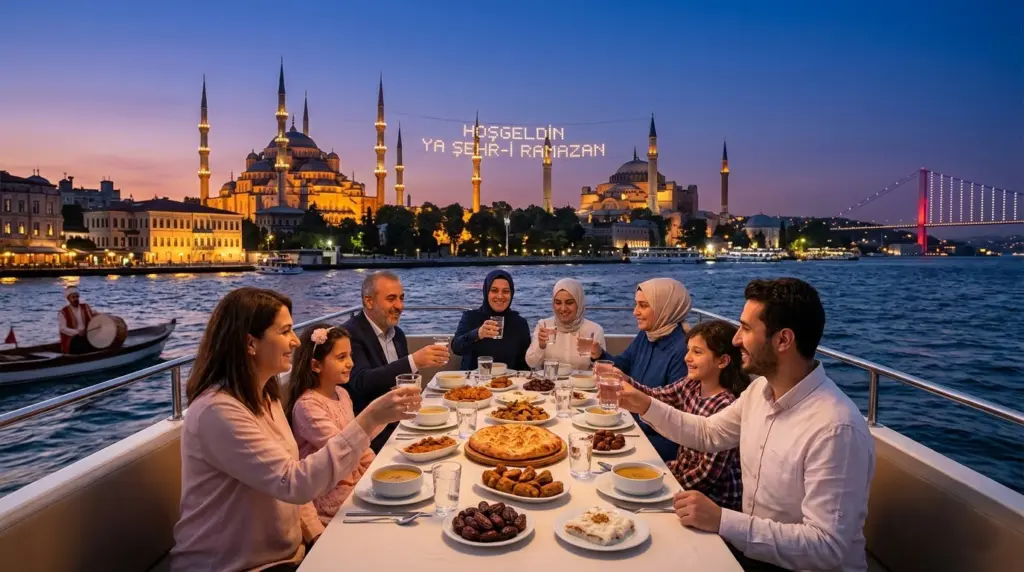
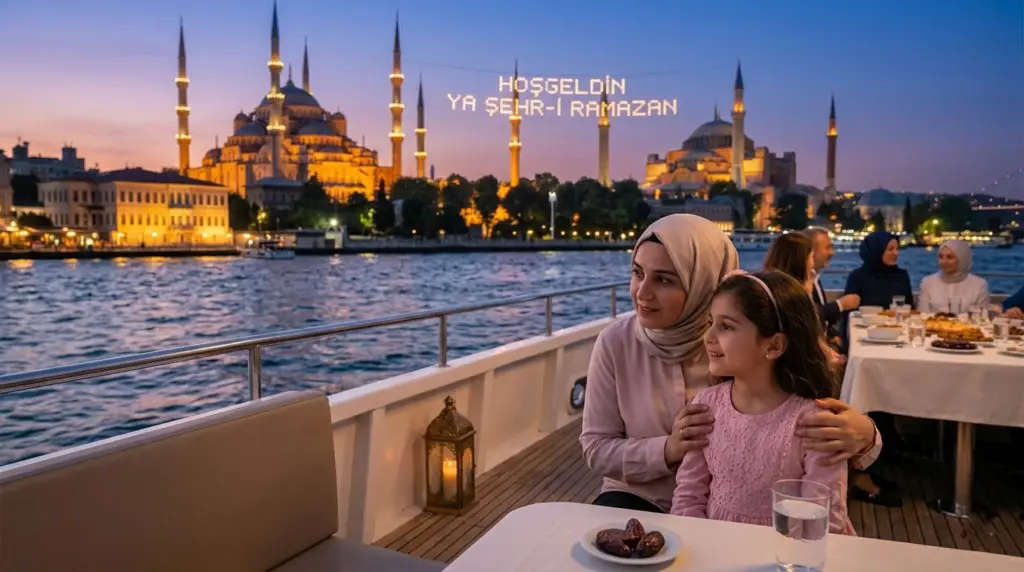
One of the most beautiful sights in Istanbul during Ramadan is the Mahya. These are illuminated messages strung between the minarets of the grand imperial mosques like the Blue Mosque and Süleymaniye. Messages like “Welcome Ramadan” or “Love Your Nation” glow against the night sky, a tradition dating back to the Ottoman era.
Ramadan decorations are also becoming more common, with streets and shopping malls adorned with crescent moons, stars, and lanterns, creating a festive ambiance similar to holiday seasons in the West.
Food and Culinary Traditions During Ramadan
Turkish cuisine shines during Ramadan. While you can find delicious food everywhere, there are specific tastes that define this month:
Ramazan Pidesi: A round, flat bread topped with sesame and nigella seeds, baked only during this month. The smell of fresh pide wafting through the streets before sunset is an iconic Istanbul experience.
Güllaç: The star dessert of Ramadan. It is a light, milky dessert made with thin starch leaves, rose water, milk, and pomegranate seeds. It is preferred over heavier syrups because it is refreshing after a long day of fasting.
Hurma (Dates): The traditional way to break the fast, following the Prophet’s custom.
Osmanlı Şerbeti (Ottoman Sherbet): A refreshing drink made from fruits, flower petals, and spices, often served to quench thirst after a day of fasting.
Experiencing a Bosphorus Cruise During Ramadan
While Iftar in a restaurant is lovely, having Iftar in the middle of the Bosphorus is an experience of a lifetime. At Bosphorus Cruise, we offer special Ramadan Iftar Cruise packages that combine the spiritual serenity of the month with the stunning beauty of Istanbul.
Why Choose a Bosphorus Iftar Cruise?
Unique Atmosphere: Imagine breaking your fast as you sail between Europe and Asia. The Adhan (call to prayer) resonates from the mosques on both shores simultaneously, creating a surround-sound spiritual moment.
Visual Feast: You will have the best view of the Ramadan decorations and Mahya lights on the historic mosques from the water.
Traditional Menu: Enjoy a curated Iftar menu featuring soup, warm appetizers, grilled meats, and the inevitable Güllaç.
Peaceful Experience: Far from the city crowds and traffic, it is a peaceful, family-friendly way to observe the holy month.
How Is Ramadan Experienced in Istanbul?
Visiting Istanbul during Ramadan offers a unique perspective on the city’s soul.
The Atmosphere of Istanbul During Ramadan
The city feels different. There is a sense of collective patience during the day and a collective explosion of joy after sunset. The air is filled with reverence. Even for non-Muslims, the atmosphere is contagious. The hospitality (misafirperverlik) of the Turkish people is at its peak; do not be surprised if you are invited to share a table or offered tea by a stranger.
How Ramadan Shapes Daily Life in Istanbul
Visitors will notice that museums and tourist sites are open, often with fewer crowds in the mornings. However, restaurants in tourist areas remain fully operational. In more conservative neighborhoods like Fatih or Eyüp, you will see fewer people eating on the streets, but no one will judge a tourist for doing so.
Ramadan Nights in Historic Istanbul
The nights come alive after Iftar. Here are some top activities to experience the Ramadan spirit:
Visit Sultanahmet Square: It turns into a fairground with families picnicking on the grass and vendors selling roasted chestnuts and corn.
Attend Book Fairs: Explore religious and historical literature at the annual book fairs held near major mosques like Beyazıt.
Listen to Sufi Music: Many cultural centers host free Sufi music concerts and Whirling Dervish performances.
Sahur by the Bosphorus: Join locals who stay up late to enjoy the cool evening air until the pre-dawn meal (Sahur).
Frequently Asked Questions About Ramadan in Istanbul
If you are planning a trip, you likely have questions about ramadan fasting rules and how they affect your stay.
Are shops, restaurants, and attractions open during Ramadan in Istanbul? Yes, absolutely. Istanbul is a major global city. Shopping malls, museums, and attractions maintain regular hours. Restaurants in tourist areas (Sultanahmet, Taksim, Galataport) and upscale districts are open and serve food throughout the day. In very traditional neighborhoods, some small local eateries might close for lunch renovation or only do take-away, but you will never go hungry.
Can visitors join an Iftar meal? Yes! Joining an Iftar is highly recommended. Many restaurants offer special “set menus” for Iftar. You should make reservations in advance as places fill up quickly at sunset. Our Bosphorus Cruise Iftar dinners are particularly popular and welcome guests from all cultures and religions.
Can visitors eat and drink during the day in Ramadan? Yes. Non-Muslims are not expected to fast. You can eat and drink in restaurants and cafes. However, out of respect for those fasting, it is polite to avoid eating or drinking (and smoking) conspicuously while walking down the street in crowded, traditional residential areas. In tourist zones, it is completely normal.
Does Ramadan affect transportation and daily services in Istanbul? Public transportation operates normally, but there may be a spike in traffic right before sunset (the “Iftar rush”) as everyone tries to get home. Conversely, the streets become incredibly empty and peaceful during the Iftar hour itself.
Is Ramadan a good time to visit Istanbul? It is one of the best times. Here is why: Cultural Depth: You get to see a side of the culture that is usually hidden. Festive Vibe: The Ramadan decorations, food festivals, and Mahya lights create a magical environment. Hospitality: The general spirit of kindness and sharing is at its peak. Unique Experiences: Ending your day with a Bosphorus cruise under the moonlight is the perfect way to embrace the magic of Ramadan 2026.
