The Bosphorus offers far more than a scenic passage between two continents, as it presents a continuous historical landscape where political power, architecture, and geography intersect along the water’s edge.
Rather than functioning as a simple strait, it serves as a living museum in which layers of empires remain visible through enduring historic landmarks.
From massive Byzantine fortresses positioned for defense to monumental Ottoman palaces designed for ceremony and residence, the Istanbul skyline tells a complex story of authority, ambition, and cultural identity.
Each structure rising from the shoreline reflects deliberate choices shaped by strategy, prestige, and visibility.
This guide explores the most impressive Bosphorus landmarks that can be observed directly from the water, offering insight into their historical roles and architectural meanings.
Through this perspective, the strait reveals Istanbul’s layered identity in a way no inland route can replicate.
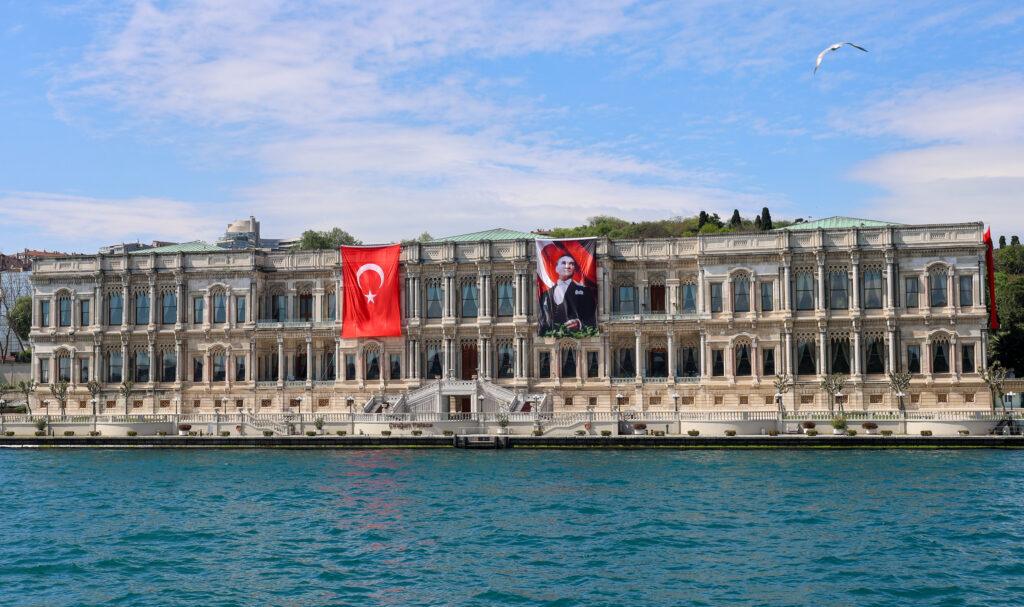
Dolmabahçe Palace
Dolmabahçe Palace dominates the European shoreline with a scale and elegance that immediately signals its role within the late Ottoman Empire’s modernization period.
Designed as a new imperial center, the palace directly faces the Bosphorus, using the water as a ceremonial foreground.
The architectural language of the palace blends Baroque, Rococo, and Neoclassical influences, reflecting the empire’s engagement with European aesthetics while maintaining Ottoman ceremonial traditions.
Its grand halls, crystal chandeliers, and marble interiors were carefully positioned to impress both foreign diplomats and domestic elites arriving by sea.
Today, Dolmabahçe Palace remains one of the most recognizable historic buildings along the Bosphorus, admired equally from land routes and passing boats.
Its waterfront presence continues to symbolize a pivotal transition in Ottoman imperial identity.
Çırağan Palace
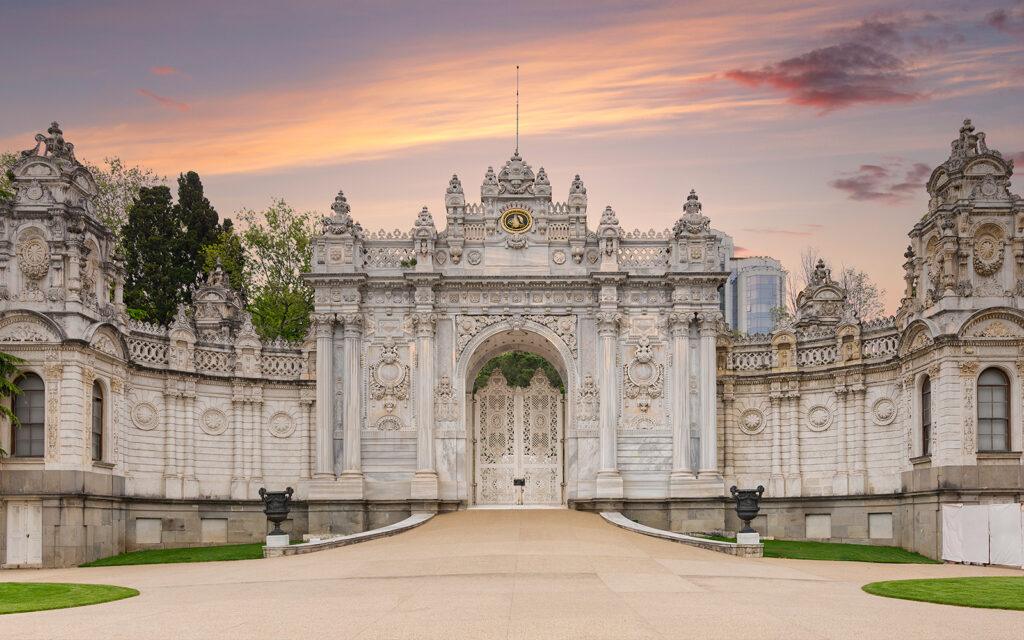
Çırağan Palace extends gracefully along the Bosphorus shoreline, representing the height of late Ottoman luxury and architectural ambition.
Constructed primarily from white marble, its elongated façade was designed to be experienced from the water as much as from the land.
Once serving as a residence for sultans and a stage for imperial ceremonies, the palace embodied prestige and continuity.
Although a devastating fire destroyed much of the original structure, extensive restoration preserved its historical presence.
Today, operating as a luxury hotel, Çırağan Palace remains an iconic element of the Istanbul skyline, where heritage and contemporary hospitality coexist along the Bosphorus.
Beylerbeyi Palace
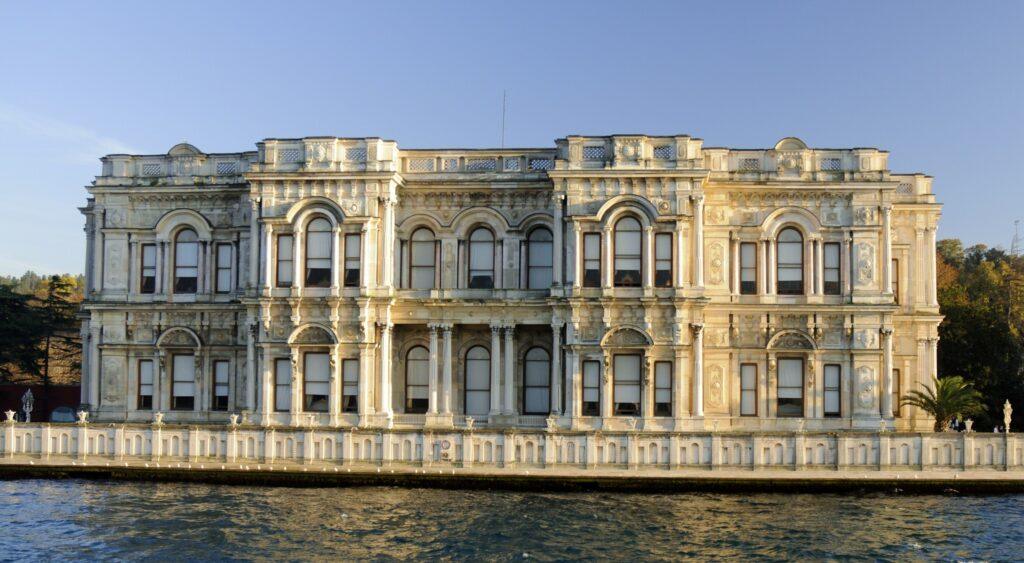
Located on the Asian shore, Beylerbeyi Palace served as a summer residence for Ottoman sultans and a guest palace for visiting foreign rulers.
Its position along the Bosphorus allowed for a calmer rhythm compared to the European shore.
The palace’s interior design emphasizes balance, light, and comfort, while its gardens and terraces open directly toward the water.
This spatial relationship reflects a diplomatic elegance rather than monumental display.
Viewed from the sea, Beylerbeyi Palace appears refined and harmonious, reinforcing its role as one of the most visually balanced Bosphorus landmarks.
Rumeli Fortress
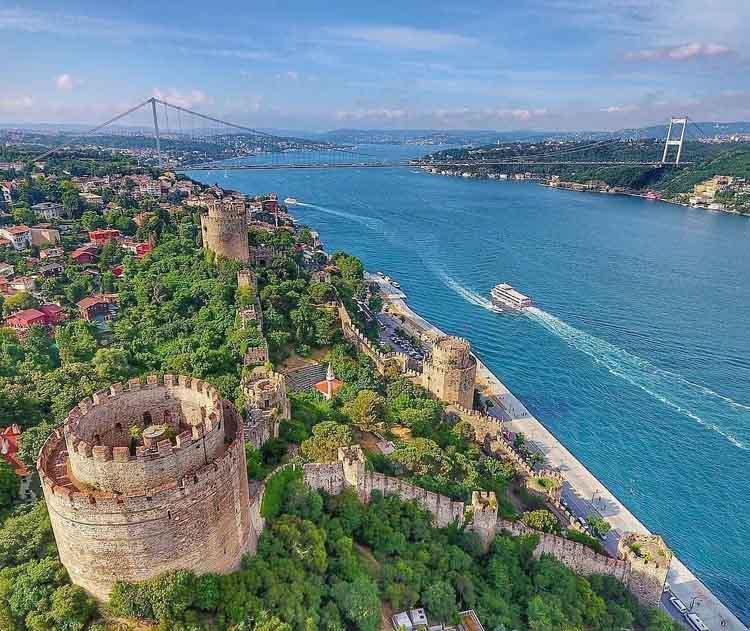
Rumeli Fortress rises dramatically on the European side of the Bosphorus at its narrowest point, where control over maritime traffic proved decisive.
Commissioned by Mehmed the Conqueror, the fortress played a crucial role during the Ottoman siege of Constantinople.
Its massive walls and towers dominate the landscape, projecting military strength and strategic precision.
Unlike palatial structures, its design prioritized speed of construction and defensive efficiency.
From a passing Bosphorus cruise, the fortress commands attention as one of the most imposing historic landmarks along the strait.
The Castle at Rumeli Rumeli Hisar
Anadolu Fortress
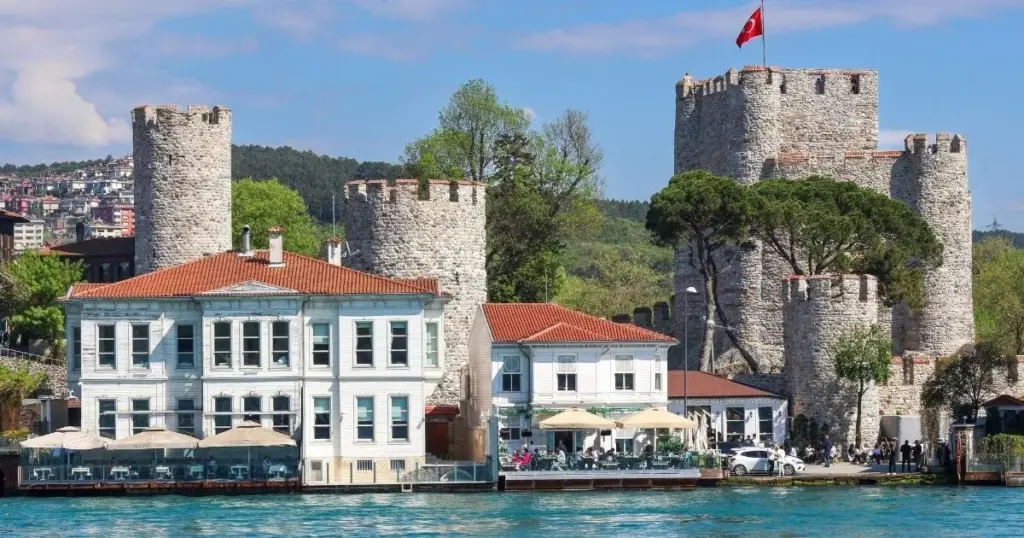
Standing directly opposite Rumeli Fortress, Anadolu Fortress represents an earlier phase of Ottoman strategic planning along the Bosphorus.
Its more modest scale reflects its role within a broader defensive network.
The fortress integrates closely with the surrounding neighborhood, blending early Ottoman military architecture with everyday urban life.
This intimacy contrasts sharply with later monumental structures.
Seen from the water, Anadolu Fortress adds balance to the Bosphorus landscape, making history feel accessible and human.
Maiden’s Tower (Kız Kulesi)
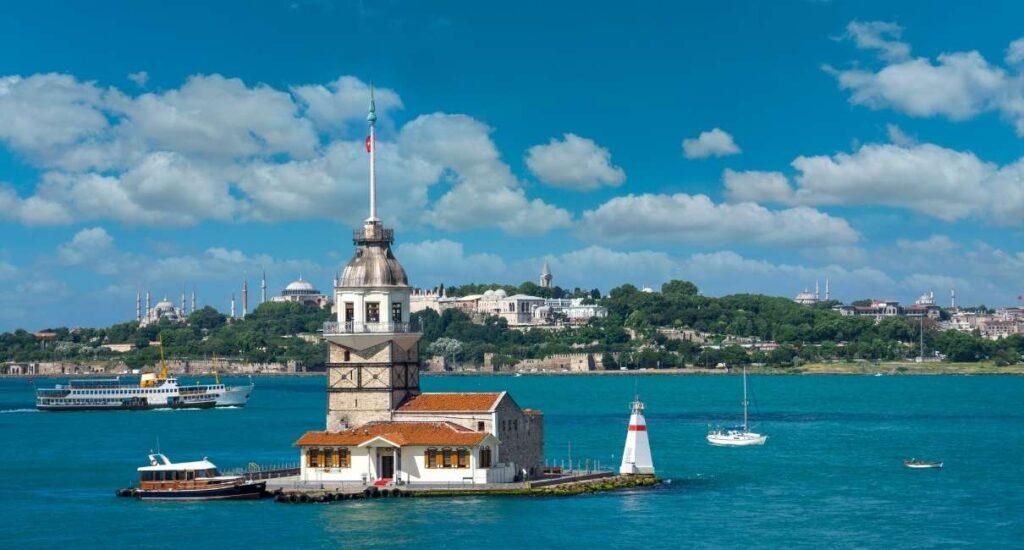
The Maiden’s Tower rises from a small islet near the southern entrance of the Bosphorus, occupying a position that has inspired legend and symbolism for centuries.
Its isolation from the shore enhances its visual and cultural impact.
Throughout history, the tower served as a defensive post, lighthouse, and quarantine station, with each era leaving visible traces.
These layered functions contribute to its enduring mystique.
From the water, the tower appears timeless, making it one of the most emotionally resonant Bosphorus landmarks.
Boukoleon Palace Ruins
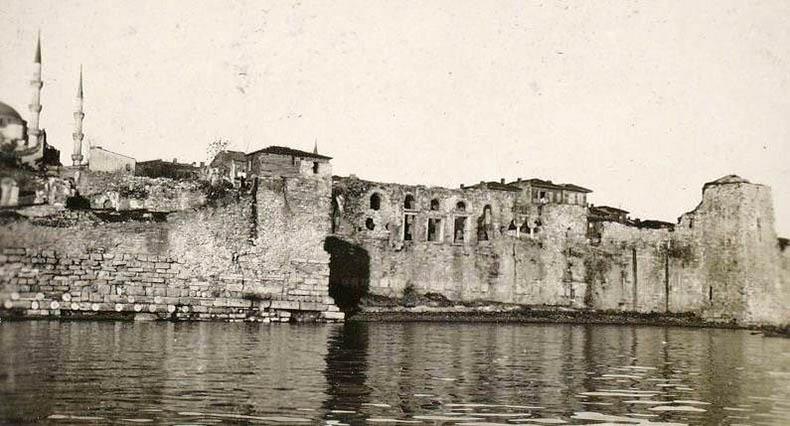
The ruins of Boukoleon Palace stretch along the edge of the Sea of Marmara, where Byzantine emperors once connected imperial life directly with maritime access.
Its terraces and sea walls emphasized both prestige and security.
Although time reduced the palace to fragments, its presence still communicates authority and continuity.
Passing boats reveal a rarely noticed chapter of Byzantine power.
Conclusion: History Flowing with the Bosphorus
The Bosphorus presents centuries of civilization through a continuous shoreline of historic buildings and imperial landmarks.
Each structure contributes a distinct chapter to Istanbul’s evolving identity.
Viewing these landmarks from the water provides unmatched perspective, revealing architectural intention and strategic placement.
For those seeking to explore this experience in depth, curated journeys such as our Bosphorus experiences offer an immersive way to connect with history.
Exploring the Bosphorus means reading history written in stone along the shore.
Every bend of the strait reveals another layer, ensuring that the journey never feels complete.
Are you ready to discover our impressive Bosphorus tours?
Wikipedia: Bosphorus


