


 Más vendido
-27%
Más vendido
-27%
Espectáculo de derviches giróvagos on the Bosphorus
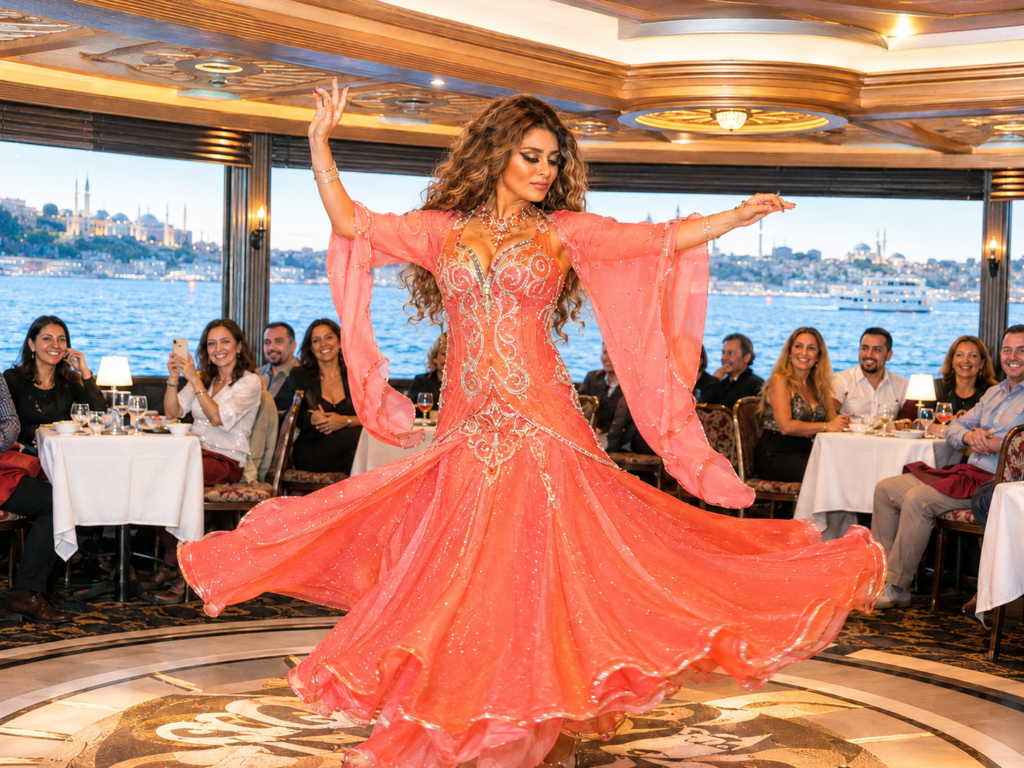
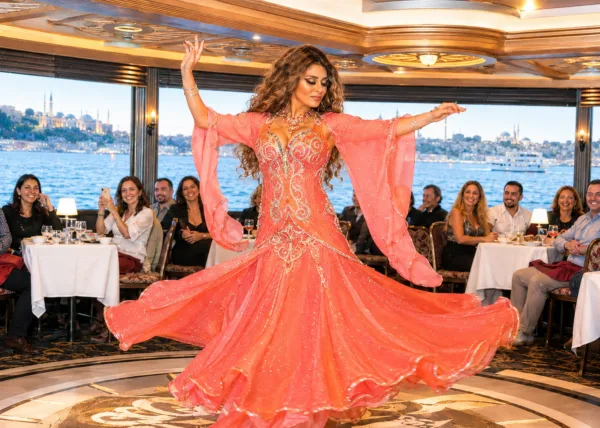
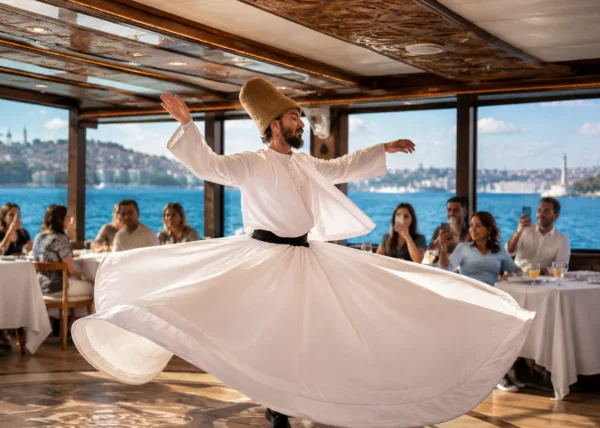
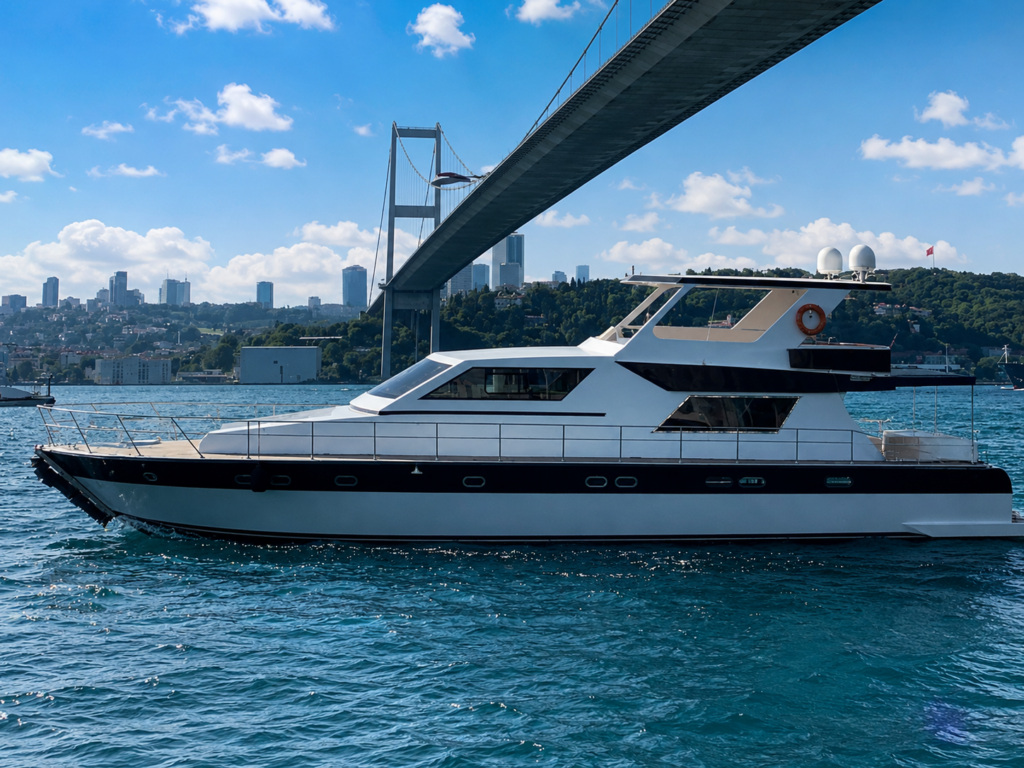
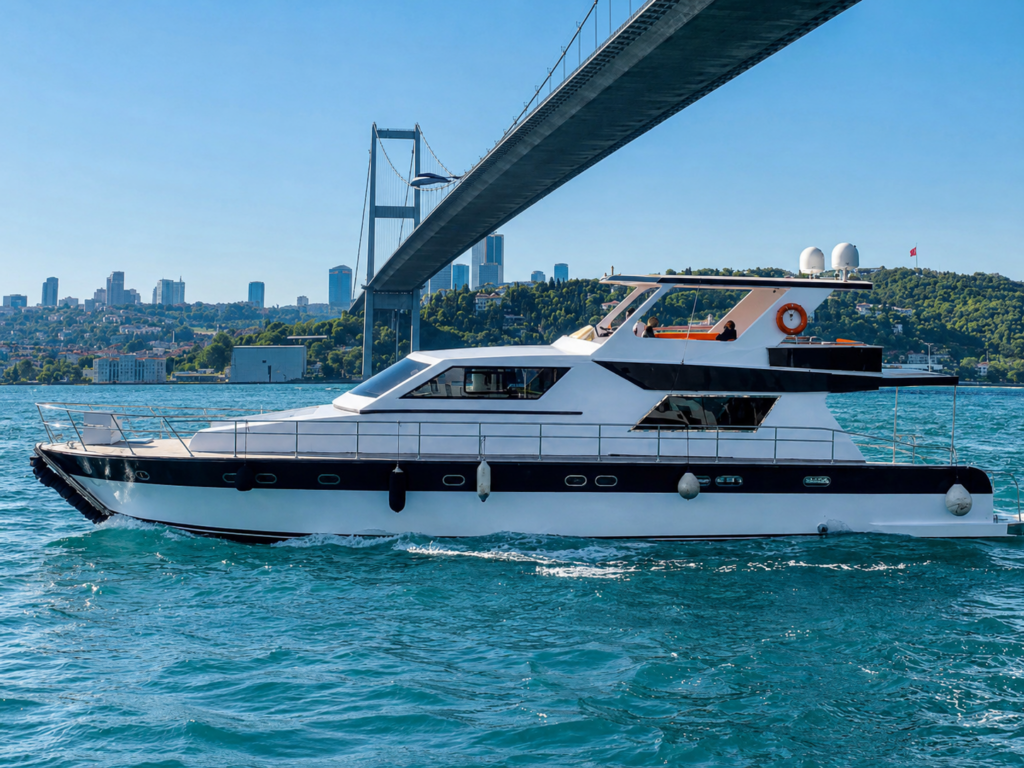
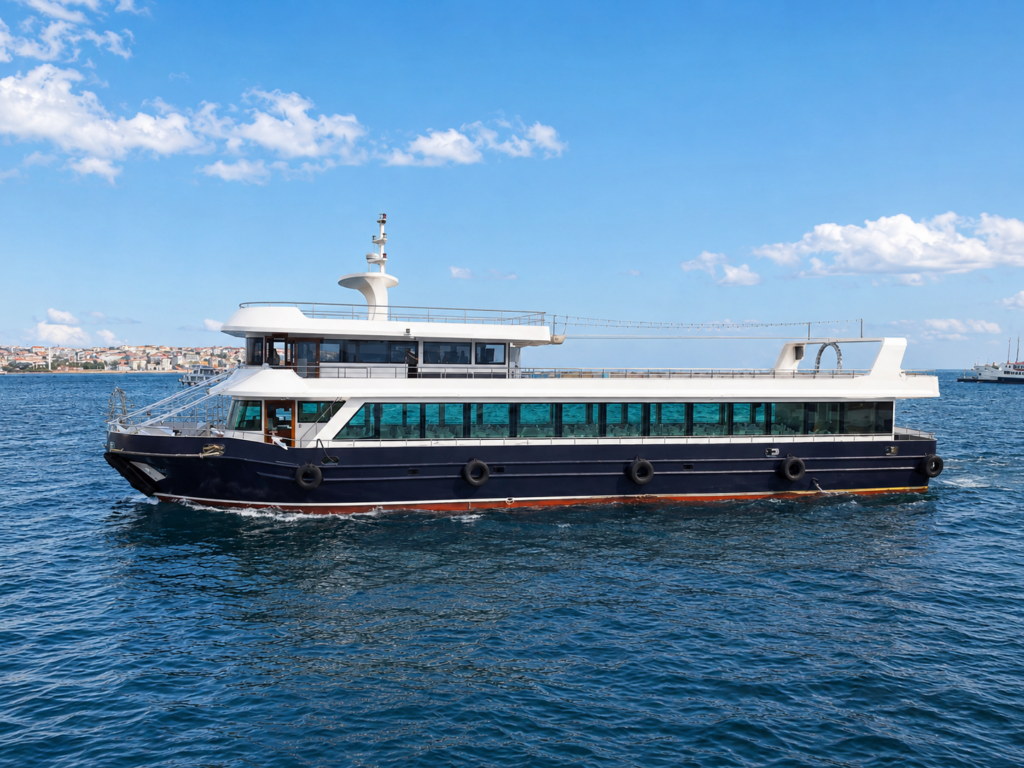
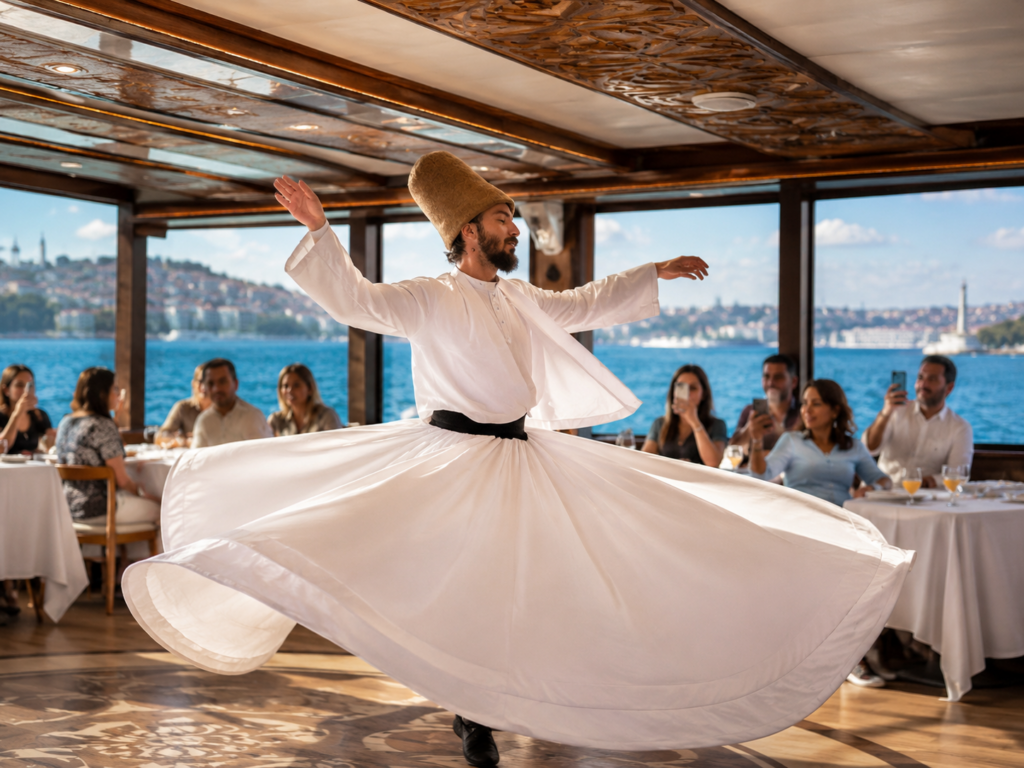
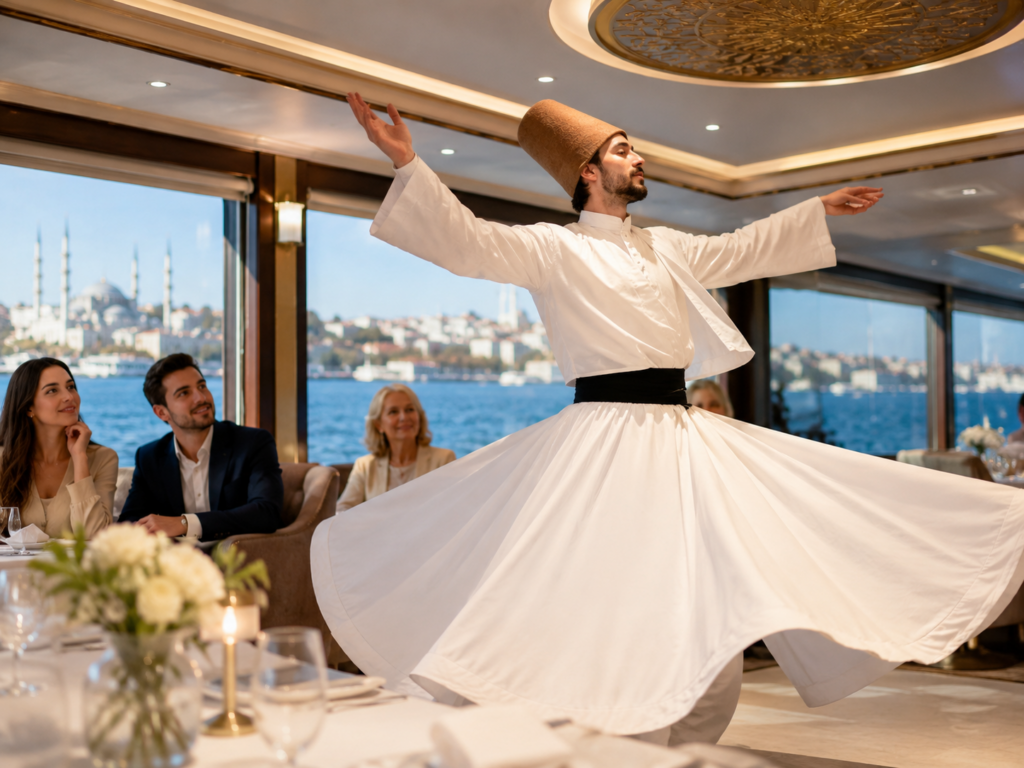
An authentic Mevlevi Sema ceremony performed live on the open deck of our Crucero con cena por el Bósforo, white robes spinning to live ney music as the lit bridges glide past. Included in every dinner cruise booking from €30, no separate ticket needed, with hotel pickup and free cancellation up to 24 hours.
The Sema is a 700-year-old Sufi ritual: dervishes in long white robes and tall felt hats whirl in slow circles representing love, surrender and union with the divine, accompanied by the ney reed flute, kudüm and tanbur. On our cruise, the lights dim mid-dinner, the music starts and the whole boat goes quiet, a five-minute performance that takes the room with it.
Our dervishes are trained in the Mevlevi tradition and the ceremony follows the seven traditional stages, performed with reverence rather than as theatrical entertainment, right next to the tables, with the Bosphorus skyline as the backdrop.


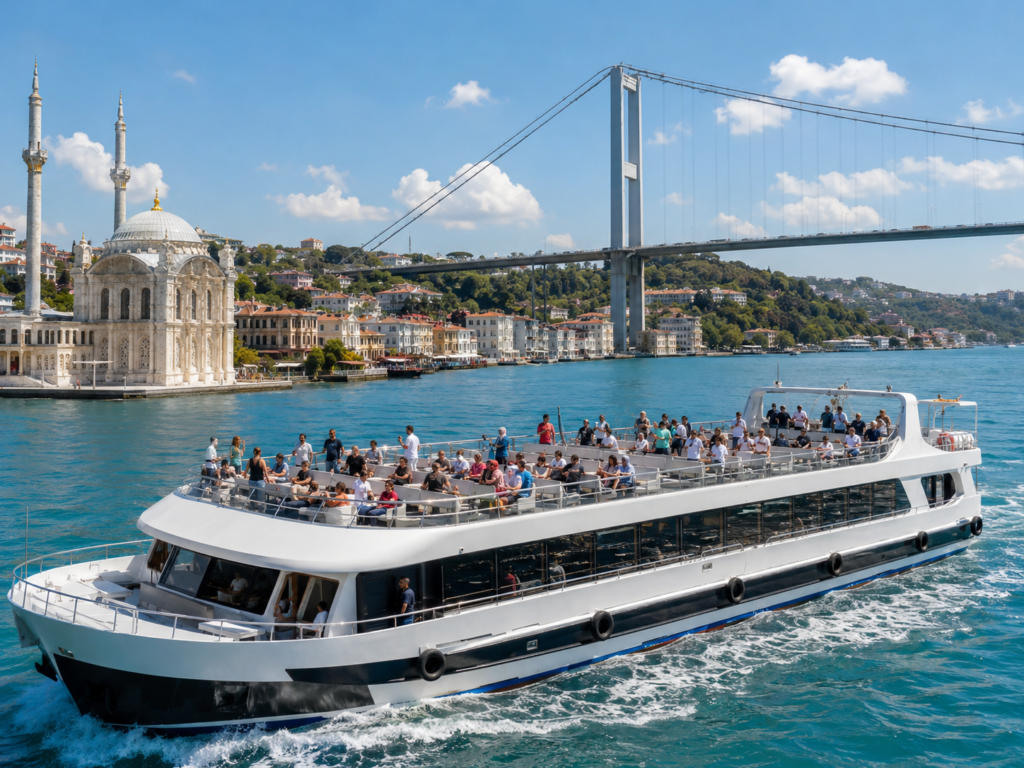
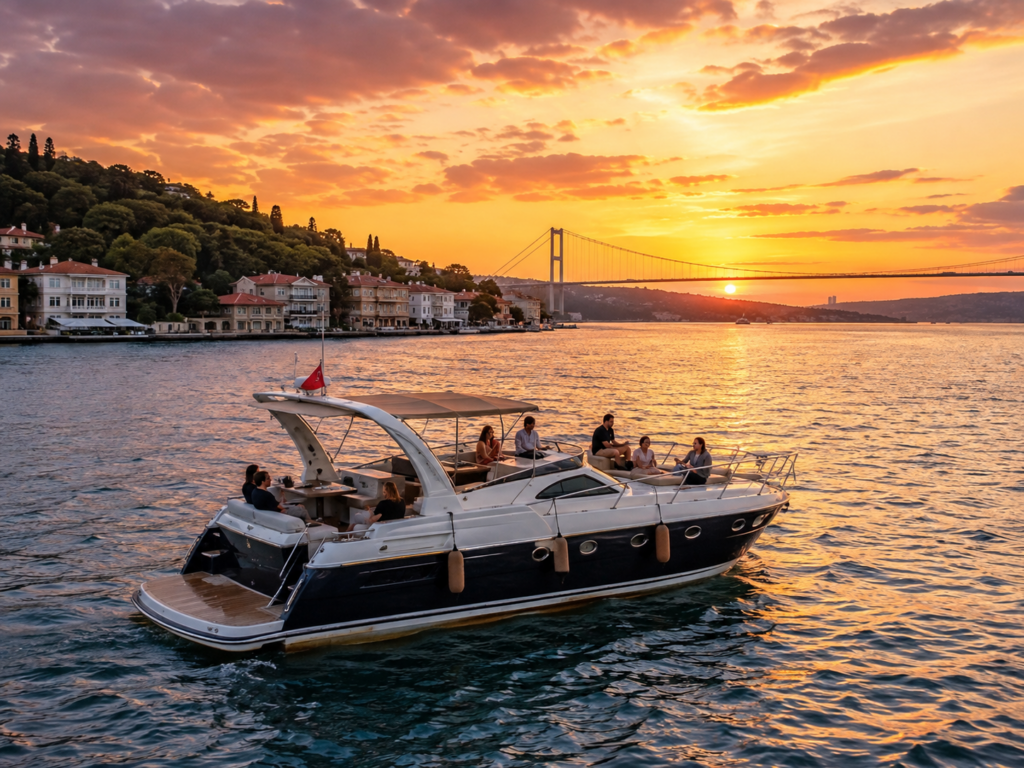
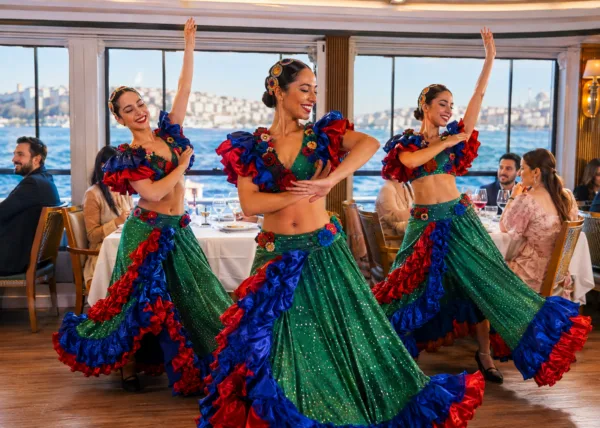
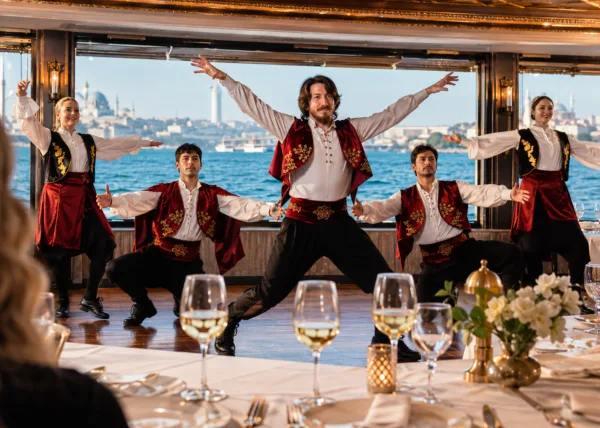
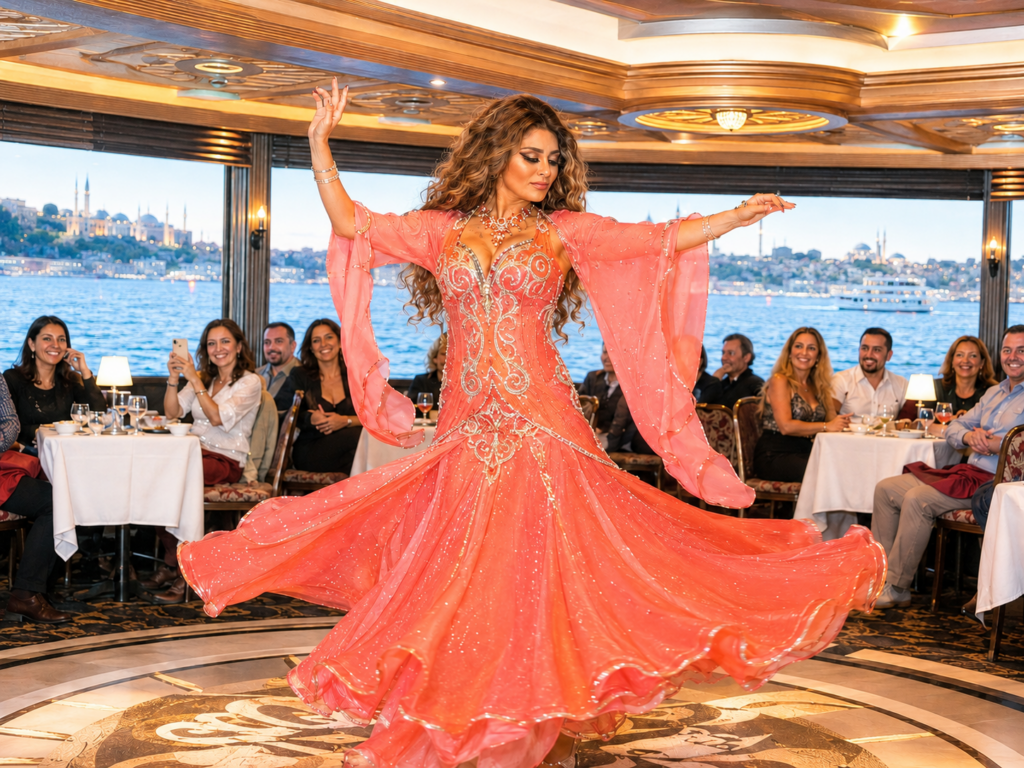
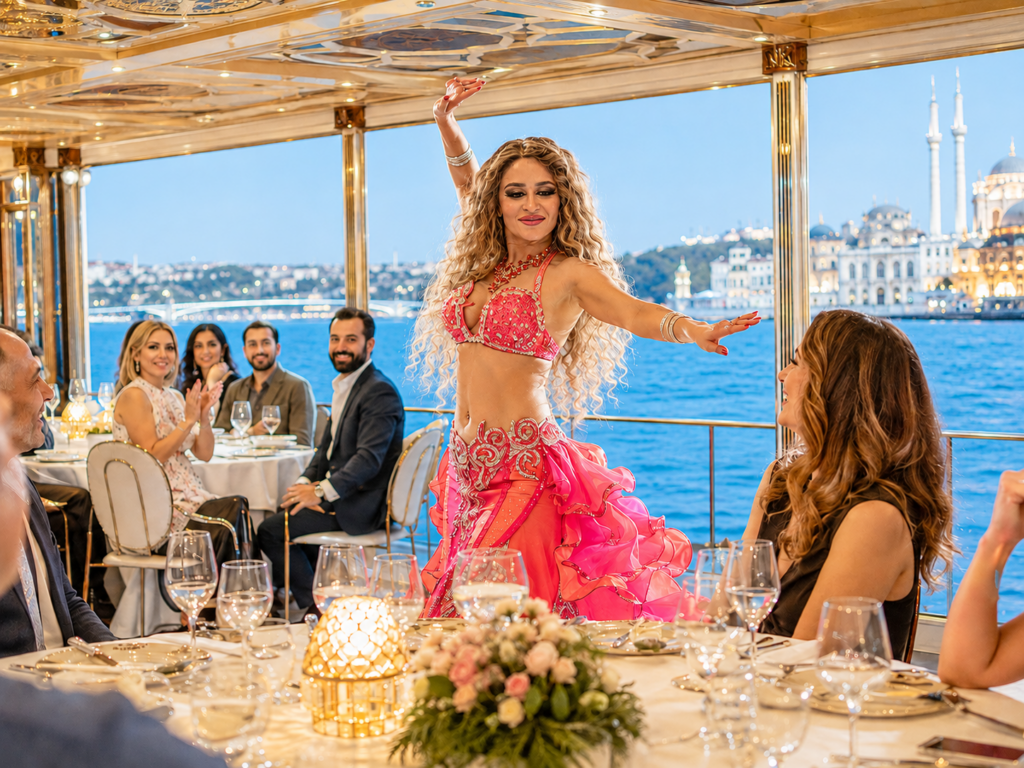
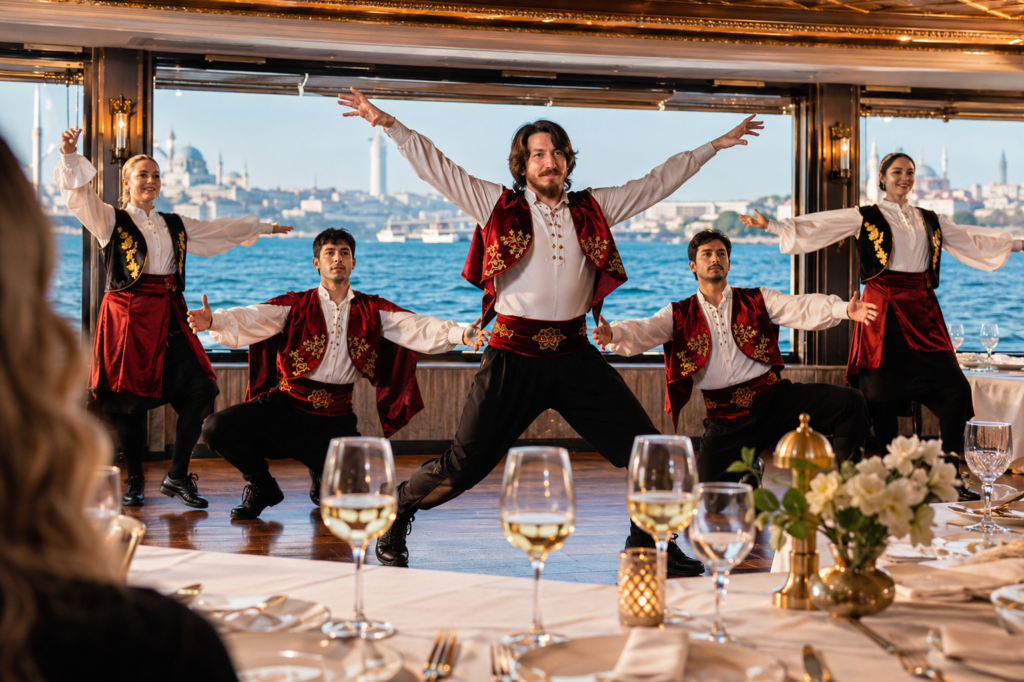
Important to know: there is no separate "Sema cruise" ticket. The Whirling Dervish performance takes place during our regular Crucero con cena por el Bósforo, a 3-hour evening with a five-course Turkish dinner, belly dance, folk shows and a DJ set, with the Sema as its most atmospheric moment.
Typically four dervishes whirl simultaneously with a small ensemble of Sufi musicians. Photography is welcome without flash; we ask invitados to stay seated and let the ritual keep its quiet. The show sails every night of the year, rain or shine, on heated, weather-proof boats.
See the Sema, Pick Your Crucero con cena Package
Every package below includes the live Whirling Dervish ceremony, the difference is on the menu and the table.
Más vendido
-27%
 Económico
-27%
Económico
-27%
 Económico
-33%
Económico
-33%
 Alcohol incluido
-23%
Alcohol incluido
-23%
 Vegetarian
-27%
Vegetarian
-27%
 Vegetarian
-9%
Vegetarian
-9%
 Experiencia VIP
-23%
Experiencia VIP
-23%
 Experiencia VIP
-20%
Experiencia VIP
-20%
The Seven Stages of the Sema, on the Water
How the ceremony unfolds during your dinner cruise
Boarding & Dinner BeginsHotel pickup from ~19:30, boarding at Kabataş and a welcome drink at your reserved Mesa con vistas al Bósforo.
20:15The Lights DimBetween courses, the deck lighting drops and the ensemble takes position, ney, kudüm and tanbur.
22:00Naat & TaksimThe ceremony opens with a vocal eulogy and a ney improvisation, the boat goes quiet.
SemaThe WhirlingDervishes drop their black cloaks, symbolising rebirth, and begin the slow spin, right arm to the sky, left to the earth.
SemaFour SelamsThe four musical movements of the ritual unfold as the lit bridges and Torre de la Doncella glide past the windows.
SemaClosing PrayerThe ceremony closes with a recitation; the room holds still for a moment before the evening flows on.
+5 minThe Night ContinuesBelly dance, Anatolian folk shows and a DJ set follow, the full dinner cruise programme until 23:30.
23:30The Sema is performed with reverence, no flash photography, and we kindly ask invitados to remain seated during the ceremony.
Sema Experience
What makes the ceremony on the water unforgettable
Authentic Mevlevi Ritual
Dervishes trained in the Mevlevi tradition, following the seven traditional stages of the Sema.
Live Sufi Ensemble
Ney, kudüm and tanbur played live, no recordings, no theatrics.
The Bosphorus Backdrop
White robes spinning against the lit bridges, a frame you will not find in any hall in the city.
Apto para familias
Children are welcome, we simply ask that they stay seated and quiet during the five minutes.
Included with Every Crucero con cena
The Sema is one act of a full evening
Incluido
- ✓ Live Mevlevi Sema ceremony on board
- ✓ 3-hour crucero nocturno por el Bósforo
- ✓ Five-course Turkish dinner menu
- ✓ Belly dance & Anatolian folk shows
- ✓ Live DJ & international music set
- ✓ Private table with Bosphorus view
- ✓ Recogida y regreso al hotel (per package)
- ✓ Free cancellation up to 24 hours
Not Included
- ✕ All alcoholic beverages
- ✕ Souvenir photos by the ship photographer
- ✕ Personal expenses & tips
Best Months to Catch the Sema on the Bosphorus
The ceremony sails every night of the year
Spring · Apr – May
Mild evenings and open-deck ceremonies against pink twilight, the shoreline in bloom.
Summer · Jun – Aug
Warm nights and long open-air evenings, the sea breeze cools the deck through the show.
Autumn · Sep – Nov
Cool, dramatic skies, the white robes against deep navy water make the year's best photographs.
Winter · Dec – Mar
Candlelit tables in the heated panoramic salon, winter never closes the show.
About the Whirling Dervish Ceremony
The Sema belongs to the Mevlevi order founded on the teachings of the 13th-century mystic Rumi. Every gesture carries meaning: the tall felt hat represents the ego's tombstone, the white robe its shroud, and the slow rotation mirrors the turning of the planets, the right palm open to the sky to receive, the left turned to the earth to give.
Seeing it on the Bosphorus adds what no hall can: the lit palaces and bridges of two continents turning slowly behind the dervishes. We are an operator, not a reseller, the boats, the kitchen and the performers are ours, and booking direct means no commission layers, no deposit and payment on the boat.
Private boat charters with a dedicated Sema ensemble are available for groups, weddings and corporate events. For the full programme and menus, see the Crucero con cena por el Bósforo.
The Meaning Behind the Ceremony
Who Rumi Was, and Why the Sema Exists
The ceremony was born in 13th-century Konya, in the circle that formed around Mevlana Jalaluddin Rumi. Rumi was a respected scholar and jurist until his meeting with the wandering dervish Shams of Tabriz turned him toward mysticism and poetry, and the Masnavi he wrote afterwards became one of the most widely read works in the Islamic world. After his death in 1273, an event the Mevlevis still call Seb-i Arus, the Wedding Night, his son Sultan Veled gave the loose gatherings of followers a fixed liturgy and founded the Mevlevi order. What you watch on the deck is therefore not a folk dance invented for tourists but a form of prayer transmitted almost unchanged for more than seven centuries. UNESCO recognised the Mevlevi Sema ceremony as Intangible Cultural Heritage in 2008, which is why an authentic performance follows a set order instead of improvising for the audience.
What Every Movement in the Sema Means
Nothing in the ritual is decorative. Each gesture is a line of theology performed with the body, and once you know what to look for the five minutes read very differently.
- The black cloak falls. The hirka stands for the grave; dropping it is the death of the ego and rebirth into truth.
- Arms crossed on the chest. The body forms the Arabic numeral one, the unity of God, before the turning begins.
- Right palm to the sky. The dervish receives divine grace rather than claiming it.
- Left palm to the earth. What is received is passed on, so the semazen becomes a channel and not a destination.
- Anticlockwise rotation around the heart. It mirrors the orbit of the planets and the circling of pilgrims around the Kaaba.
- Head tilted, eyes half-open. The unfocused gaze is the trained technique that lets a semazen turn for minutes without losing balance.
What the Dervishes Wear, and Why
The costume is read as sacred rather than theatrical, which is why our dervishes appear only in traditional white and black, without the coloured or sequinned variants some show productions use to make the spinning more photogenic. Every piece carries a meaning:
| Garment | What it is | What it means |
|---|---|---|
| Sikke | Tall camel-hair hat | The tombstone of the ego |
| Tennure | White skirted robe | The shroud of the ego |
| Hirka | Black outer cloak | The grave, discarded as the turning starts |
| Elifi nemed | Belt tied at the waist | Discipline of the body |
| Weighted hem | Sewn into the tennure | Gives the robe its steady bell shape at speed |
The Music That Carries the Sema
The Instruments of the Sufi Ensemble
The music on board is played live, a few metres from your table, which is a large part of why the ceremony lands the way it does on the water. A typical ensemble on our boats is small and acoustic:
- Ney - an end-blown reed flute that opens the ceremony with a free-rhythm taksim; its breathy tone represents the soul cut from the reed bed, the image in the opening lines of the Masnavi.
- Kudum - a pair of small kettledrums that keep the pulse the dervishes turn to.
- Tanbur - a long-necked lute carrying the melodic line.
- Rebab - a bowed spike fiddle, used on some nights for the older Mevlevi repertoire.
- Vocalist - reciting the naat, the eulogy to the Prophet that traditionally opens the Sema.
Why the Music Is Never Recorded
A recorded track cannot follow a live ceremony. The length of the taksim, the tempo of each selam and the moment the turning stops all shift slightly from night to night, and the ensemble reads the dervishes rather than a stopwatch. Playing live also keeps the volume where it belongs: quiet enough that the boat genuinely goes silent, instead of a sound system filling the salon. If you want to hear the ensemble at its clearest, the tables closest to the open deck are the ones to ask for when you book.
Sema Ceremony or Dervish Show?
The Honest Difference
Istanbul offers both, and the two terms are used interchangeably in marketing, which confuses a lot of visitors. Here is the distinction as we would explain it to a friend:
| Authentic Sema ceremony | Dervish show | |
|---|---|---|
| Structure | Seven traditional stages, fixed order | Freely choreographed |
| Música | Live Sufi ensemble | Often recorded or amplified |
| Performers | Trained semazens | Stage dancers in dervish costume |
| Costume | Traditional white and black | Coloured, lit or sequinned variants |
| Atmosphere | Silence, no applause cues | Audience interaction encouraged |
| On our cruise | This is what we perform | Kept separate, later in the evening |
Seeing the Sema on the Water Versus in a Hall
Istanbul has excellent land venues, and if your only goal is a long, formal ceremony in a historic room, a dedicated cultural centre will serve you well. What a hall cannot give you is the setting, and most travellers are really choosing between a one-hour ceremony indoors and a three-hour evening on the water that contains the ceremony:
- White robes turning against the lit spans of the Puente del Bósforo.
- Palacio de Dolmabahçe floodlit off the port side as the ensemble plays.
- The Torre de la Doncella glowing at the mouth of the strait during the closing prayer.
- Dinner, a full show programme and a night view of two continents on the same ticket.
- No transfer between a restaurant and a venue, the whole evening happens in one place.
Planning Your Evening on Board
Where the Sema Fits Into the Programme
The ceremony is the quiet centre of a three-hour evening, not the whole of it. Dinner is served in courses from the moment the boat leaves Kabatas, and the deck lighting drops between courses, usually around 22:00, when the ensemble takes position. After the closing prayer the evening opens back up: Turkish oriental belly dance, Anatolian folk performances and a DJ set run until the boat returns to the pier. The Crucero con cena por el Bósforo page sets out the full running order and menus, and entertainment on board covers each act individually.
What to Wear and How to Behave During the Ceremony
There is no dress code on board and smart casual is the norm, but a few small things make the five minutes better for everyone:
- Bring a light jacket. The open deck gets cool after dark for most of the year, including summer.
- Stay seated for the duration. Moving through the salon breaks the ritual for the tables behind you.
- No flash. A sudden flash in a dim salon can genuinely disorient a turning dervish.
- Photography and personal video are otherwise welcome, shutter sounds off.
- Children are welcome and usually watch more intently than the adults; we only ask that they stay at the table.
Booking, Pricing and What Is Included
There is no separate Sema ticket. The ceremony is included in every dinner cruise package on this page, so the price you pay is the price of the evening:
| Package | Price | Transfer | Best for |
|---|---|---|---|
| Menú estándar y refrescos sin traslado | EUR 30 / persona | Encuentro en el puerto | Best value, invitados staying near Kabatas |
| Menú estándar y refrescos | EUR 40 / persona | Recogida y regreso al hotel | The most booked package |
| Menú vegetariano y refrescos | EUR 40 / persona | Recogida y regreso al hotel | Vegetarian invitados |
| Menú VIP y refrescos | EUR 100 / persona | Recogida y regreso al hotel | Front-row view of the Sema |
Every package covers the three-hour cruise, the five-course Turkish menu, the full show programme and a private table with a Bosphorus view. We are the operator rather than a reseller, which means no commission layer, no deposit and no prepayment: you reserve online and pay on the boat, with free cancellation up to 24 hours before departure. For private charters with a dedicated Sema ensemble, contact us for a tailored quote, and if you would rather see the strait in daylight first, the Bosphorus sunset cruise is the usual companion booking.
Ask About Tonight's Sema Before You Book
Not sure whether the ceremony runs on your date, or whether the timing suits your children? Send us a message with your date and group size — we confirm the evening's programme, table position and child pricing within minutes, in English.
Preguntas frecuentes
The Sema is a roughly 5-minute live performance during the Crucero con cena por el Bósforo; the full cruise lasts about 3 hours.
No, there is no separate "Sema cruise" ticket. The ceremony is included in every Crucero con cena package, from €30 per person.
Yes. Our dervishes are trained in the Mevlevi tradition and the ceremony follows the seven traditional stages, performed with reverence rather than as theatrical entertainment.
Typically four dervishes whirl simultaneously, accompanied by a small ensemble of Sufi musicians playing ney, kudüm and tanbur.
Yes, without flash or shutter sounds, out of respect for the ritual. Video for personal use is allowed; please remain seated during the performance.
Yes, the ceremony is family-friendly. We kindly ask parents to keep children seated and quiet during the five minutes of the ritual.
Kabataş Pier, easily reached by tram and funicular. Hotel pickup vehicles drop you at the pier shortly before boarding.
Yes, private charters with a dedicated Sema ensemble are available for groups, weddings and corporate events. Contact us for a custom quote.
Yes, the boats are fully enclosed and weather-proof, heated in winter and air-conditioned in summer. The ceremony goes ahead in rain, wind or cold.
Free cancellation up to 24 hours before departure with a full refund.
What Travelers Say About the Sema Show
4.9
★★★★★
12,400+ verified ratings across TripAdvisor, GetYourGuide and Google
Crucero con cena & Sema
★★★★★
We came specifically for the Whirling Dervish show. The dervish in the white skirt against the Bosphorus skyline at night was unforgettable.
L. M. · Spain · April 2026
Crucero con cena & Sema
★★★★★
The Sema portion was the part we'll remember, five minutes, traditional ney music, real Mevlevi dervishes, then the rest of the cruise to drink it in.
R. K. · United Kingdom · April 2026
VIP Crucero con cena & Sema
★★★★★
The show is short but takes the room with it, the lighting drops, the music starts and the whole boat goes quiet. Then the evening flows around it.
S. A. · United States · April 2026