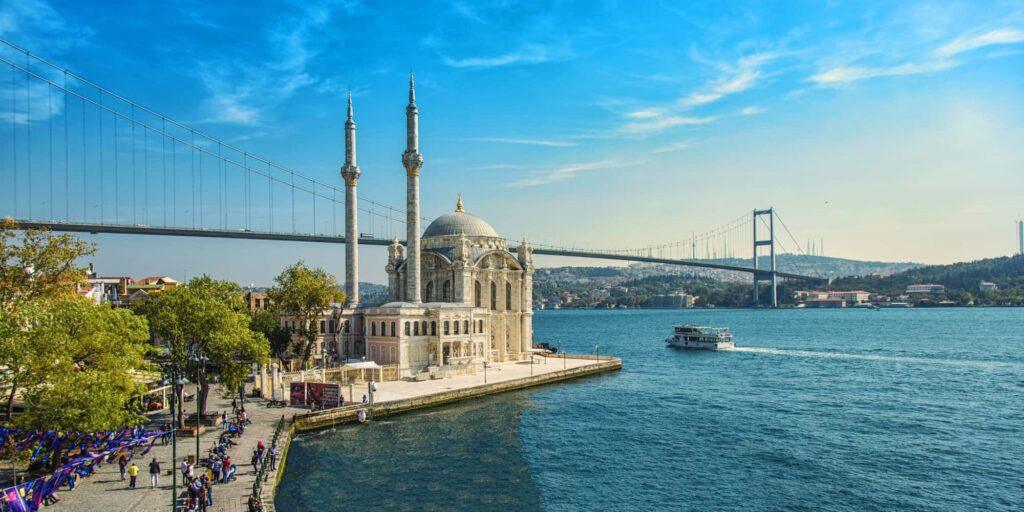
The Bosphorus has always represented more than a geographical boundary, as it functioned for centuries as a living center of authority where emperors and sultans shaped both governance and daily life.
Rather than ruling from distant interiors, many rulers chose to position themselves along this strategic waterway, allowing the landscape itself to reflect imperial presence and control.
From Byzantine emperors in Constantinople to Ottoman sultans in waterfront palaces, life along the Bosphorus combined political power with visibility, comfort, and symbolism.
Understanding who lived here helps modern travelers see Istanbul not only as a scenic destination, but as a city shaped by residential power.
The Bosphorus in the Byzantine Imperial World
During the Byzantine era, the Bosphorus served as a defensive line, a trade corridor, and a visual extension of imperial authority.
Although most imperial residences concentrated around the Historic Peninsula, the orientation of Constantinople remained deeply connected to the strait.
For Byzantine emperors, proximity to the Bosphorus meant constant awareness of naval movement and external threats.
Living near the water symbolized control over access rather than leisure.

Constantine the Great and the Imperial Vision of the Bosphorus
When Emperor Constantine the Great founded Constantinople in the fourth century, he deliberately structured the city around the strategic value of the Bosphorus.
Although his main palace complex stood closer to the Sea of Marmara, the city’s political and ceremonial orientation faced the strait.
This decision established a long-lasting imperial logic, where rulers governed with the Bosphorus as their visual horizon.
Later emperors inherited this spatial mindset along with the city itself.
Byzantine Emperors and Seasonal Waterfront Residences
Several Byzantine emperors used Bosphorus-facing structures as seasonal retreats rather than permanent homes.
These locations offered physical distance from court pressure while preserving immediate access to the capital.
Such imperial residences balanced isolation with authority, allowing rulers to withdraw without losing visibility.
This residential strategy influenced later Ottoman palace planning almost directly.
The Ottoman Reinterpretation of Life on the Bosphorus
After 1453, the Ottoman approach to the Bosphorus shifted from observation to immersion.
Rather than ruling above the shoreline, Ottoman sultans increasingly chose to live directly beside the water.
This transformation redefined the strait as a lived imperial environment rather than a symbolic boundary.
Over time, palaces on the Bosphorus formed a continuous royal landscape.
For travelers who want to experience this imperial relationship with the water firsthand, a Bosphorus cruise offers the most immersive way to enjoy the strait and its palaces, turning history into a lived experience.
Topkapı Palace and Early Ottoman Authority
In the early Ottoman period, Topkapı Palace served as the main residence of the sultans, positioned on elevated ground overlooking the Bosphorus.
Although not built directly on the shoreline, the palace maintained visual dominance over maritime traffic.
From its terraces, Ottoman sultans observed naval ceremonies and diplomatic arrivals.
This relationship emphasized surveillance and control rather than domestic life.
Dolmabahce Palace and Modern Imperial Residence
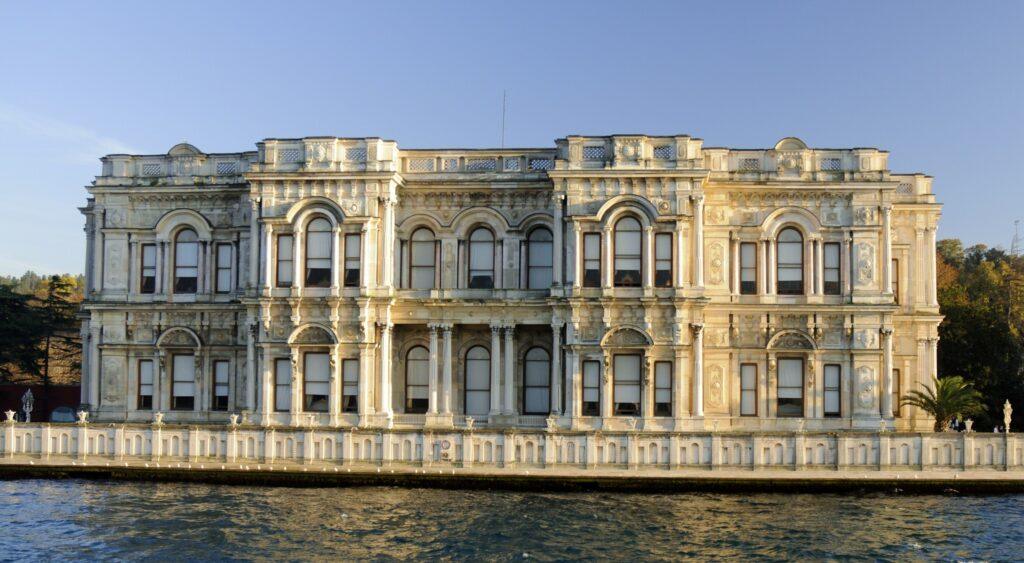
By the nineteenth century, Ottoman rulers adopted a more intimate relationship with the Bosphorus by relocating their primary residence to the waterfront.
Dolmabahçe Palace represents this shift clearly, blending European architectural influence with Ottoman ceremonial tradition.
Here, Ottoman sultans lived directly beside the water, signaling modernization and openness to global diplomacy.
The palace transformed the Bosphorus into an extension of imperial daily life.
Beylerbeyi Palace and Seasonal Living
Beylerbeyi Palace, located on the Asian shore, functioned as a summer residence for Ottoman sultans and a guest palace for foreign rulers.
Its location offered cooler air and a calmer rhythm compared to central Bosphorus palaces.
Living here allowed rulers to experience the Bosphorus as a space of comfort rather than ceremony.
This balance reflected a mature imperial lifestyle.
Why Living Along the Bosphorus Defined Power
Choosing to live along the Bosphorus was never accidental.
For both emperors and sultans, residence represented authority, accessibility, and permanence.
Control over the strait meant control over trade routes, defense lines, and diplomatic visibility.
Life along the Bosphorus placed rulers at the center of the empire’s rhythm.
The Bosphorus shaped the daily lives of emperors and sultans just as deeply as it shaped the city itself.
From Byzantine emperors observing the strait from elevated complexes to Ottoman sultans living within waterfront palaces, the waterway remained an imperial constant.
For visitors to Istanbul, understanding these residential choices transforms the Bosphorus from scenery into historical space.
This is not just a place to admire, but a place that was lived in, ruled from, and remembered.
Wikipedia: Bosphorus


